

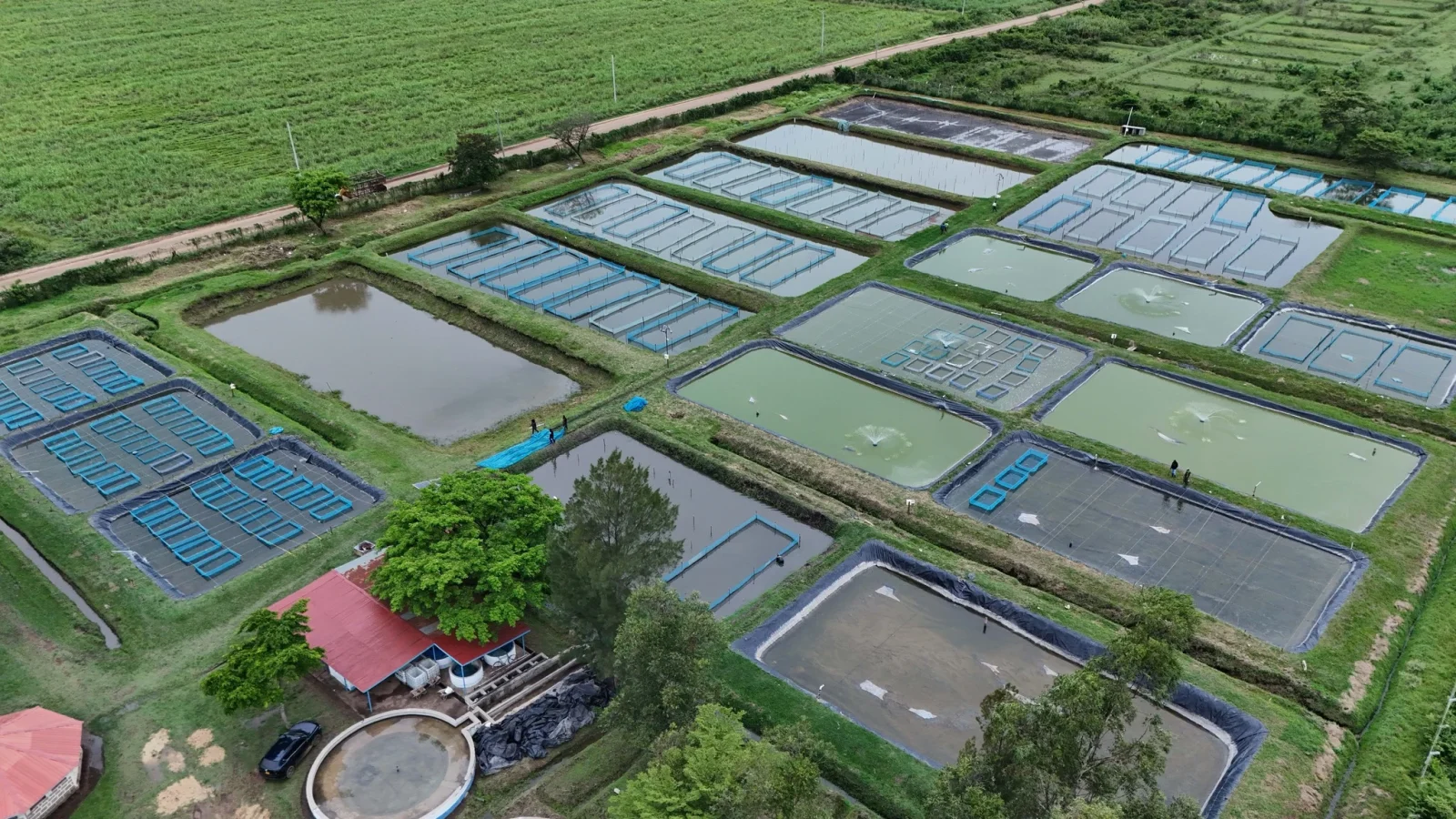
The government has intensified efforts to boost aquaculture in the Lake Region following the revival of the Kibos Aquaculture Centre in Kisumu County, a key facility supporting fish farming and the Blue Economy.
Speaking during a visit to the centre, Principal Secretary for Internal Security and National Administration Raymond Omollo said the government-managed facility, operated by the Lake Basin Development Authority, remains the largest public fingerling production centre in the country and a major driver of aquaculture growth in western Kenya.
The centre currently operates 21 ponds with an annual production capacity of 36 million fingerlings, although it is presently running at about 35 per cent of its full capacity.
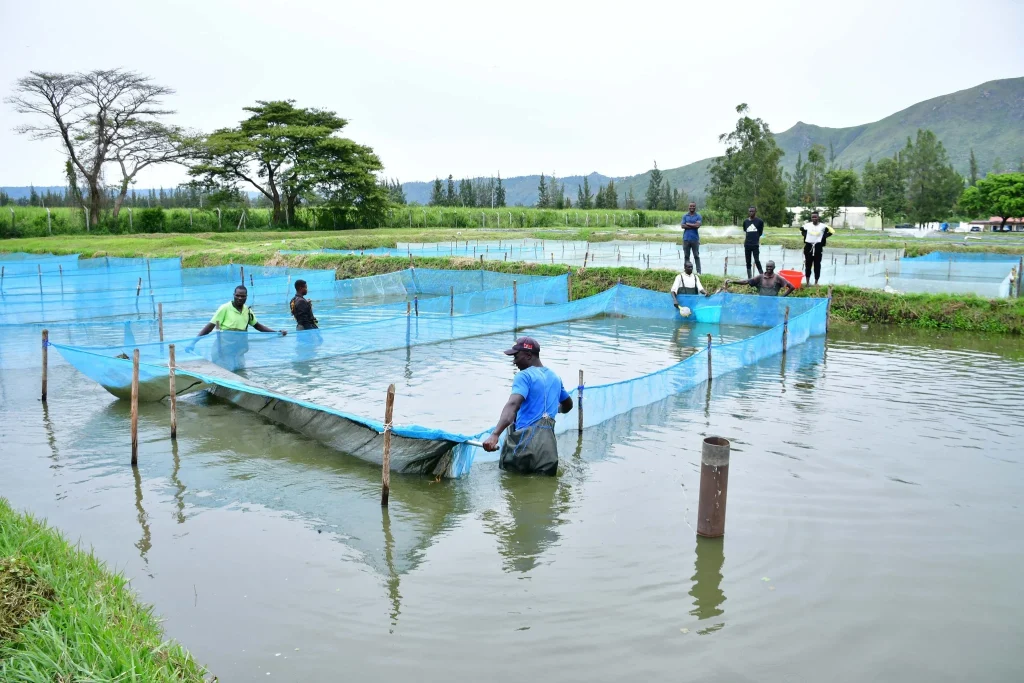
According to the PS, a government capital injection in 2024 revived the facility after nearly a decade of stalled operations, while a strategic partnership between the Authority and aquaculture firm Aquarech Ltd has accelerated its recovery and modernisation.
“In 2025, the centre produced 12 million fingerlings, supporting approximately 3,000 farmers, which represents about one-third of its total production capacity,” Omollo said.
He noted that expansion plans are underway to increase the number of farmers served to about 5,000 in 2026, with the facility targeting full annual production of 36 million fingerlings by August.
The Kibos hatchery has also integrated automated fingerling counting technology to improve accuracy and ensure farmers receive the correct quantities when purchasing stock. The centre operates two production systems, including the Recirculating Aquaculture Systems (RAS), which significantly improve fish survival rates to up to 80 per cent.
Beyond production, the centre has also positioned itself as a training hub for fish farmers across the region. Its training facility can accommodate up to 50 farmers per session, providing practical skills on modern aquaculture practices.
Farmers can also access additional training through an online learning platform offering free educational content on Nile tilapia and African catfish farming. The platform hosts more than 150 instructional videos covering key areas such as pond management, feeding practices and fish health.
The facility currently employs 22 staff members daily, both men and women, the majority of whom are youth.
Omollo said the centre’s operations demonstrate the government’s commitment to job creation, skills development and strengthening the broader Blue Economy value chain, while also helping farmers increase fish production and improve livelihoods across the Lake Region.
Read: Lumumba Estate Reborn as 2,348-Unit Affordable Housing Project Rises in Kisumu
>>> Rice Mill Complex in Kisumu to Boost Farmer Incomes and Cut Post-Harvest Losses

![Parliament in a past session. [Photo/Parliament of Kenya/Facebook]](https://businesstoday.co.ke/wp-content/uploads/2026/02/Parliament-Kenya-150x150.webp)











Leave a comment