

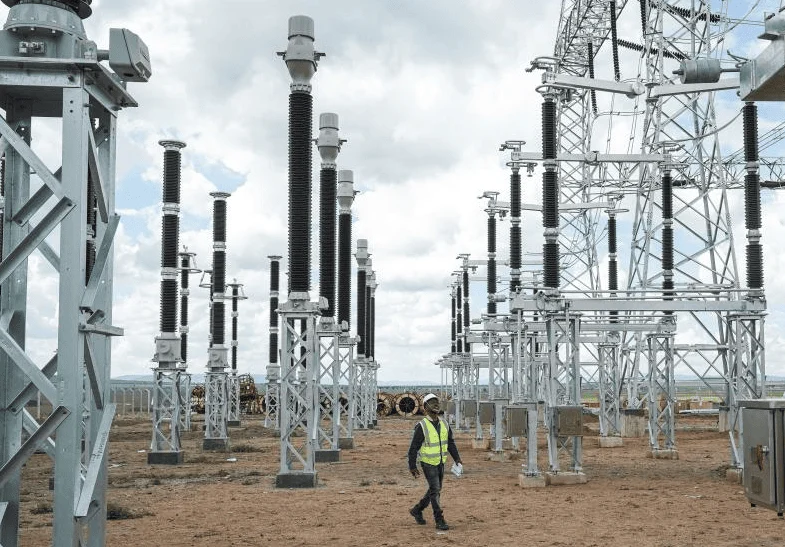
The Kenya Electricity Transmission Company Limited has sealed a major Public Private Partnership agreement aimed at expanding and modernising the country’s power transmission network.
KETRACO signed the deal with Africa50 and the PowerGrid Corporation of India in a move expected to strengthen electricity supply and support the growth of renewable energy across Kenya.
The agreement was signed in Nairobi in the presence of senior government officials, KETRACO’s board and management, and representatives of the private sector partners.
Principal Secretary for the National Treasury Chris Kiptoo witnessed the signing on behalf of Cabinet Secretary for the National Treasury and Economic Planning John Mbadi.
Also present at the event were Principal Secretaries Bonface Makokha of Economic Planning, Cyrell Odede of Public Investment and Asset Management, and Alex Wachira of Energy, alongside the Director General of the Public Private Partnership Directorate, Kepha Seda.
Speaking during the ceremony, Kiptoo said the project underscores the government’s commitment to driving economic growth through strategic investments in energy infrastructure.
He noted that a reliable and resilient transmission network is critical for a stable electricity supply, regional balance, and national development.
He said the government continues to embrace Public-Private Partnerships as a way of attracting private financing and technical expertise while safeguarding public resources.
According to Kiptoo, PPPs allow the country to deliver large-scale infrastructure projects without placing a strain on the national budget.
“The global energy landscape is changing fast as countries invest in renewable energy and improve power system reliability,” Kiptoo said.
“Kenya is keeping pace with these changes, and Public Private Partnerships remain central to this journey.”
“Through PPPs, the government can mobilise capital and expertise while protecting fiscal discipline and national priorities,” he added.
The project is valued at 311 million dollars, equivalent to about 40.4 billion shillings. The private partners will take full responsibility for financing, designing, building, operating, and maintaining the transmission infrastructure under the agreement.
The project will deliver two major high-voltage transmission corridors and new substations that will open up critical power routes across the country. The first corridor is the 400 kilovolt Lessos to Loosuk line, which will run through Samburu, Baringo, Nandi, and Elgeyo Marakwet counties, with substations at Lessos and Loosuk.
This line will provide an alternative path for evacuating wind power from Lake Turkana and reduce pressure on the existing Loiyangalani to Suswa line. It will also support the evacuation of geothermal power from the Baringo Paka Silali geothermal fields, improving grid stability.
The second corridor is the 220 kilovolt Kibos to Kakamega to Musaga line, which will serve Kisumu, Vihiga, and Kakamega counties. Substations will be built at Kibos, Kakamega, and Musaga to improve high voltage supply and reduce outages in Western Kenya.
Kiptoo said the project will support the integration of about 300 megawatts of geothermal power into the national grid and strengthen the evacuation of renewable energy in the North Rift and Western regions.
He added that improved electricity supply will support industrial growth, attract investment, and boost economic activity in regional hubs.
Reliable power will benefit households, schools, hospitals, farms, and businesses, particularly in areas that rely on electricity for irrigation, processing, and storage.
The project also includes social safeguards to protect affected communities. Local consultants and subcontractors will be engaged, opportunities will be created for women, youth, and persons with disabilities, and skills transfer will be prioritised where specialised expertise is involved.
Project-affected persons will receive fair and timely compensation, together with livelihood restoration measures to ensure community stability during and after implementation.










Leave a comment