

The classroom of 2035 does not exist yet. However, the workers who will fill it are currently sitting in Kenyan primary schools.
Here’s a reality check: 23% of today’s jobs will disappear or transform completely in the next five years, according to the World Economic Forum. The fastest-growing roles? All tech-driven. Yet many Kenyan children are still learning for a world that has already passed.
With Kenya’s youth unemployment rate at 67%, the skills gap widening, and internet access out of reach for many informal and rural students, an entire generation risks being locked out of Kenya’s digital economy before they even enter it.
Unless something changes.
Building the Bridge
That change starts with access and Airtel Kenya is providing it. Through a UNICEF Partnership that is currently in its 4th year, hundreds of schools and thousands of students now receive internet routers, 300GB of monthly data, and free access to Kenya Education Cloud and Elimika, the official teacher-training platform.
“Kenya faces a shortage of cloud engineers, data scientists, and specialised digital skills. The fix does not start in universities. It starts here in primary schools in Kayole and Makadara, where children are learning to code before they hit secondary school,” says Ashish Malhotra, Airtel Kenya Managing Director. Plans are underway to cover a minimum of 100 more schools this year.
In September 2025, Airtel Africa, through its data center arm Nxtra by Airtel Africa, broke ground for the construction of East Africa’s largest data center at Tatu City to unlock opportunities through the latest infrastructure requirements for cloud and AI services. Specialised digital skills will be on demand.
What change looks like
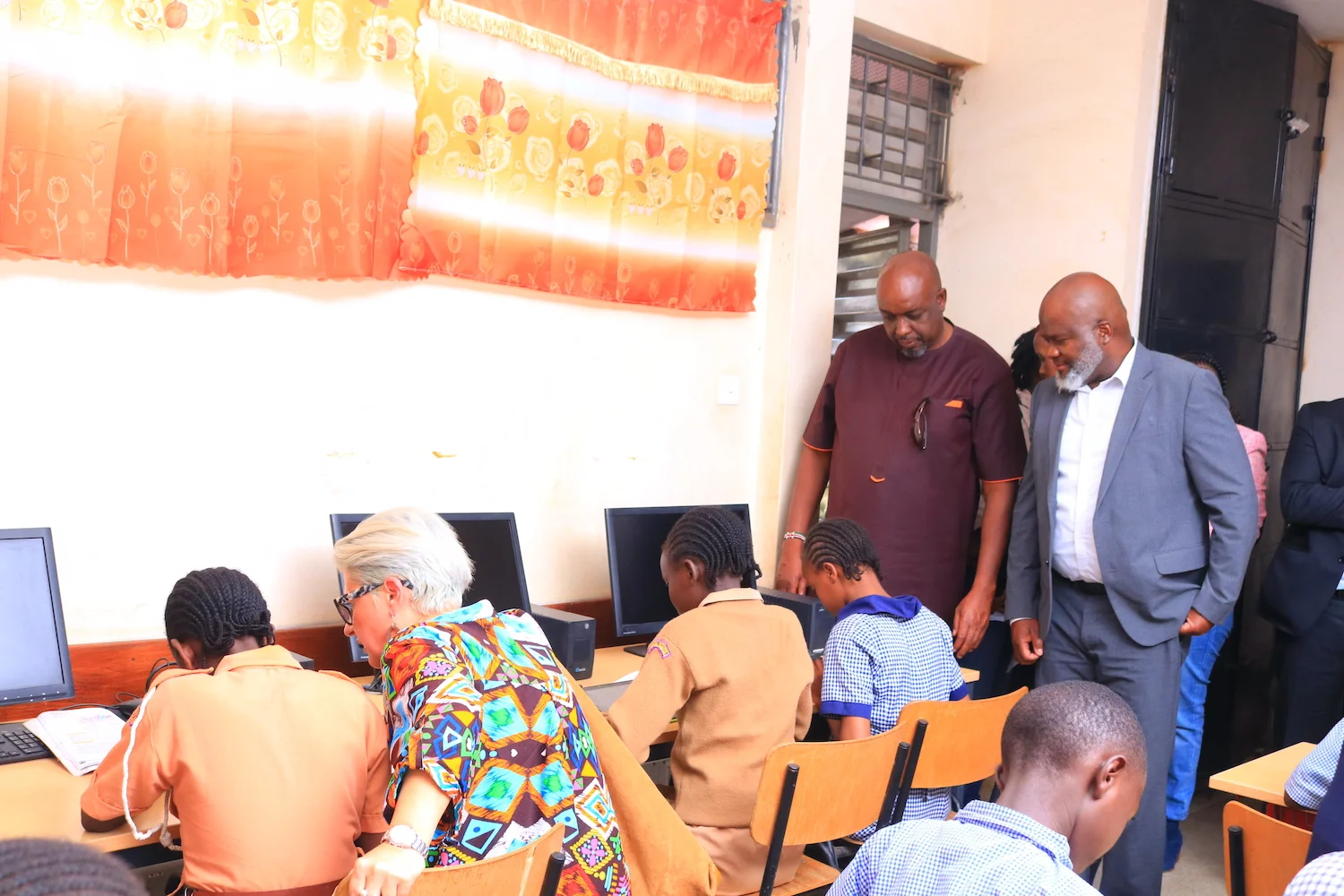
At Busara Comprehensive School in Kayole, Nairobi, Odhiambo teaches Maths, Chemistry, and Computer Studies. A year ago, teaching coding meant theory on a chalkboard. Today, with Airtel’s free connectivity, these junior secondary students are writing actual code.
“Most of the learners have improved,” Odhiambo says. “A good number were approaching expectations, but now they are meeting and exceeding.” The shift is also changing aspirations, with some planning to take careers in computer.”
Across town at Canon Apollo Comprehensive School in Makadara, an informal settlement serving 1,400 students, the headteacher has watched connectivity unlock something deeper than academic performance. In an area where drug abuse and peer pressure are constant threats, internet access has become an unexpected tool for behaviour change.
“Learners are able to be exposed to realities of life in other countries, especially items that deal with drug abuse,” the head teacher explains. “They see it in real time. Unlike traditional guiding and counselling, a learner in school here will watch that, go back home, watch it and it will sink.” The school is sponsored by the Anglican Church of Kenya through St Stephen’s Cathedral.
> China Top Luxury Brand Chery Rolls Off in Kenyan Market
The impact extends beyond warnings. Students have formed WhatsApp study groups, extending learning beyond classroom hours. Teachers enrolled in Microsoft 365 training without leaving the school. Grade 6 students who had never touched a computer now research topics independently. “The school population is now digitally aware that the internet is not only for entertainment, but it also has educational benefits,” says the headteacher.
Back at Busara, there have been similar shifts. Attendance has jumped. Academic performance has soared. The school climbed from number seven to number two in their sub-county. But the most striking achievement is that two students have been accepted to a music academy in Italy, building their portfolios through YouTube videos created using the school’s internet connection.
Why it matters now
These are not feel-good stories but an economic necessity. Research shows that 65% of children entering primary school today will work in jobs that do not yet exist. By 2030, between 50 per cent and 55 per cent of all jobs in Kenya will require some level of digital skills.
The children at Busara and Canon Apollo are not just learning to use computers. They are learning to adapt, create, and compete in a digital economy that their parents’ generation never encountered. Malhotra warns that “if we fail to invest decisively, the Silicon Savannah may remain a slogan while other African hubs overtake us.”. He’s right on the data.
The World Economic Forum identifies complex problem-solving, critical thinking, and creativity as the three most essential skills for the Fourth Industrial Revolution. While connectivity may not guarantee these skills, without it, students in informal settlements have no shot at developing them. Access is the starting line. “The future is digital,” declares Canon Apollo headteacher.
The road ahead
The head teacher is already thinking beyond today’s lessons. Teachers have enrolled in online courses, and students are now building digital portfolios. “These are children who are disadvantaged, who do not have exposure to these digital devices at home,” he says. “But once they come to school, they are exposed to that, nurturing their skills for now and in the future,” he says.
Even as the world observed World Children’s Day on 21st Nov., one undeniable truth stands out: children possess an immense capacity to drive change in their communities and beyond. With the appropriate guidance, access to resources, and opportunities, children can significantly influence the direction of our collective future.
> Journalist Attains a PhD and Gets Kenyan Media Thinking Big














Leave a comment