

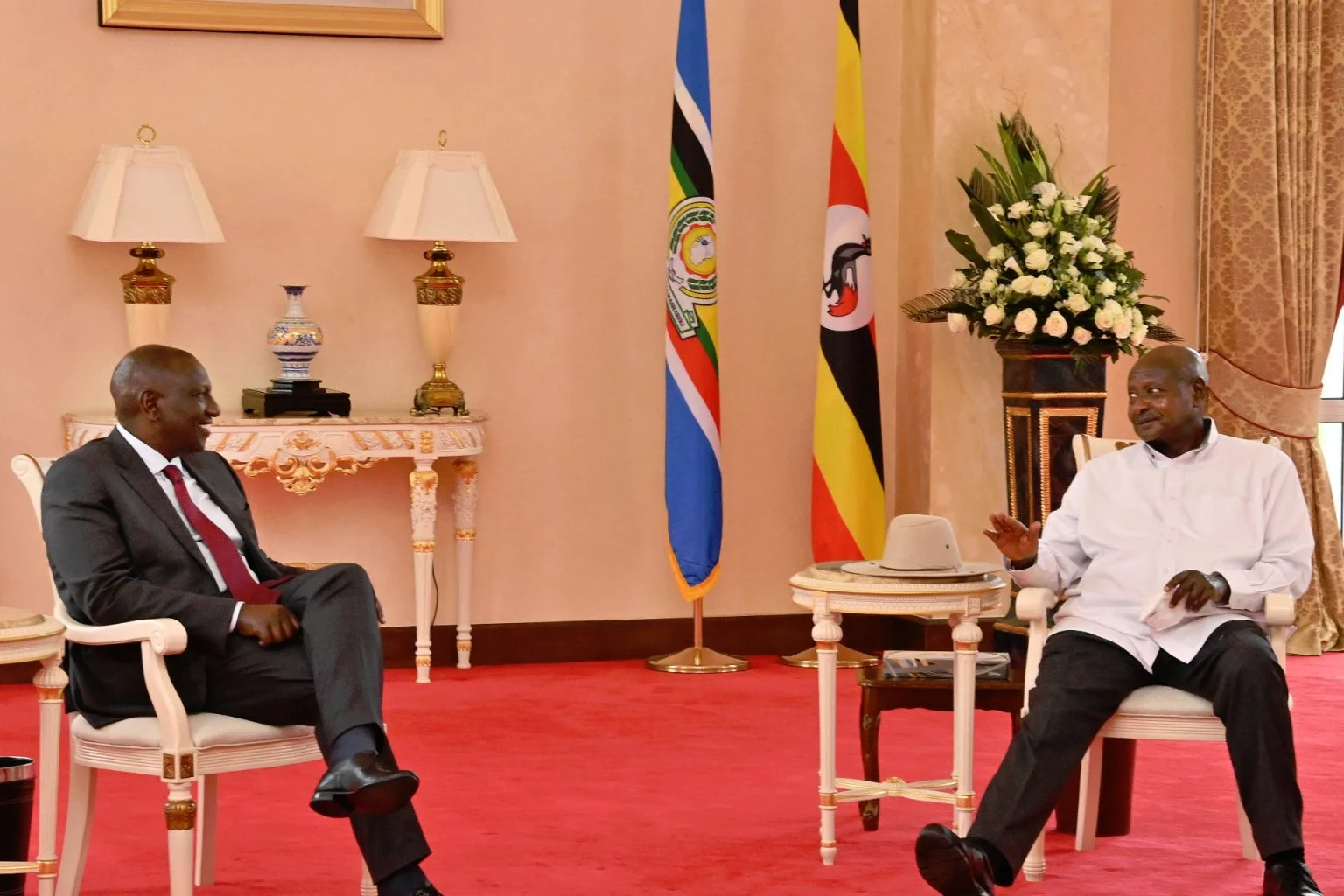
Kenya plans to to sell a 65% stake in the Kenya Pipeline Company (KPC) to Uganda and other regional investors.
President Dr William Ruto, while witnessing the ground breaking ceremony with his Ugandan counterpart President Yoweri Museveni of the $500million Devki Mega Steel manufacturing plant in Tororo Uganda, announced that the Government will retain a 35% strategic shareholding while opening up opportunities for Ugandans and other East Africans to buy into the company.
The decision follows high-level negotiations between Kenya and Uganda, aiming to enhance regional integration and cooperation.
Only recently, Uganda’s President Yoweri Museveni engaged in a public diplomatic spat with Kenya after he expressed frustration over his country’s lack of access to the Indian Ocean- a vital import/export route for East Africa.
In the new ownership structure of the pipeline, Kenya will divest 65% of its stake while Uganda is expected to become a significant investor. The move aims to strengthen economic ties between Kenya and Uganda, promoting regional development and cooperation.
Kenya Pipeline Company plans to list on the Nairobi Securities Exchange(NSE), with the initial public offering (IPO) expected to be completed by end of March, 2026.
Kenya and Uganda will also co-invest in extending the Eldoret-Kampala petroleum pipeline to Rwanda and the Democratic Republic of Congo. The two countries will also launch the Standard Gauge Railway extension from Naivasha to Kampala in January 2026, enhancing transportation links between the two East African nations.
While KPC is gearing for privatization, the process could suffer delays following several court cases challenging the Privatization Act 2025 and issues around public participation in the sale of a national asset.
Available data shows that Uganda’s export volume through Mombasa port was approximately 8m tonnes in 2024, accounting for 65.7% of the port’s total transit cargo.
Uganda is the leading user of Mombasa port followed by South Sudan, the Democratic Republic of Congo(DRC) and Rwanda.
Kenya Oil Exports to Uganda
Uganda imports around 2.5 billion litres of petroleum annually, valued at over KSh 264 billion. 90% of this cargo is handled by KPC and local oil marketing firms.
In 2024, Uganda started importing oil through the port of Mombasa in a deal between Vitol Bahrain and Uganda National Oil Corporation, ending Kenya’s monopoly. Uganda imported its first batch of oil shipments through Mombasa in June 2024.
President Ruto’s latest visit to Kampala can be seen against the background of Uganda moves to reduce reliance on Kenya’s infrastructure facilities. Uganda has been actively seeking alternative routes, including the port of Dar es Salaam in Tanzania while also investing in domestic oil production and refining capacity.
At present, Uganda transports its oil through the KPC facilities to Eldoret and Kisumu for final delivery by road.
Domestic exports to Uganda rose 14.9% in September to KSh 12.41 Billion, an all- time high in any month on record. Trade flows to Uganda between January to September 2025 reached KSh 96.65 Billion, up 5.4% year-on-year.
Forecasts shows that the flow could hit KSh 120 Billion, setting a new bar for the country’s exports to Uganda, its largest exports destination.
Apart from the oil pipeline company, the Government has also set in motion plans to offload its stakes in National Oil Corporation, New Kenya Cooperative Creameries, Kenya Literature Bureau and Rivatex East Africa.
South Africa’s Vodacom is also reported to be in discussions with the Government about buying part of its stake in Safaricom, according to sources close to the matter. The Government is seeking to ease fiscal pressures. The World Bank has already raised the red flag that Kenya’s widening fiscal deficit threatens gains brought about by a stable exchange rate and softer inflationary tendencies in the economy.
ALSO READ: Kenya Pipeline Company Seeks IPO Advisory Services











Leave a comment