


Kenya is positioning itself as Africa’s economic anchor and a driver of regional prosperity as it prepares to host the 24th COMESA Summit.
The Common Market for Eastern and Southern Africa (COMESA), a regional economic bloc rooted in Pan-Africanism, has long championed the idea that Africa’s destiny lies in Africans trading, producing, and prospering together. Its vision is to ensure that the intellectual, social, and natural resources created on the continent first serve Africans themselves.
COMESA emphasizes integration as the antidote to decades of economic exploitation, where Africa exported raw materials only to import finished products at higher costs. The bloc seeks to close this cycle by ensuring African producers trade first with fellow Africans, reclaiming dignity, value, and shared prosperity.
Kenya’s Role in COMESA
Kenya has taken a lead in this integration journey, aligning COMESA’s goals with its own Bottom-Up Economic Transformation Agenda (BETA). The country has championed trade digitisation, one-stop border posts, and regional customs systems, making it easier for goods, services, and people to move seamlessly.
Informal trade, a lifeline for thousands of cross-border traders—particularly women—has been placed at the centre of Kenya’s agenda. Initiatives such as Jukwaa markets give traders structured and transparent spaces to operate, transforming borderlines into business lines.
The Five Keys of Transformation
Kenya’s BETA rests on five “golden keys” that also define COMESA’s pathway to growth:
- Macroeconomic stability – Through careful management of inflation, debt, and foreign exchange, Kenya has risen from the 8th to the 6th largest economy in Africa. This stability anchors the shilling and boosts investor confidence across borders.
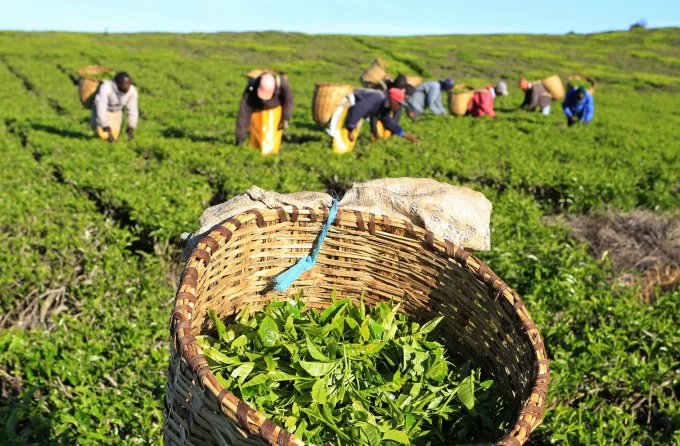
- Revitalisation of key value chains – Agriculture, livestock, fisheries, the blue economy, and mining form the backbone of Kenya’s strategy. County Aggregation and Industrial Parks (CAIPS) are linking farmers to factories, while trade safeguards in sectors such as sugar and fisheries protect competitiveness.
- Infrastructure as the hardware for growth – Flagship projects such as the Standard Gauge Railway, Konza Technopolis, Naivasha SEZ, and cross-border corridors to Uganda, Ethiopia, and South Sudan are building the logistics backbone for trade. ICT connectivity and SEZs ensure both digital and physical highways are in place.
- Jobs and income opportunities – Kenya has rolled out multiple job-creation pathways, from Kazi Kwa Ground (teachers, health workers, and climate jobs) to Kazi Mtandaoni (digital and creative economy opportunities) and Kazi Majuu (diaspora labour mobility). MSMEs remain central to this employment revolution.
- Social sector reforms – Universal health coverage through Taifa Care and education reforms including CBE, TVET, and higher education funding, are laying the human capital foundations for competitiveness.
Industrialisation and Skills Mobility
Kenya’s SEZs in Naivasha, Dongo Kundu, and Konza, along with EPZs in Athi River, Tatu City, and Sagana, are attracting investors in manufacturing. These zones are not only producing for export but also transferring skills to local workers, who in turn spread innovation across the economy.
Labour mobility is also a key focus. Recently, over 700 Kenyan youth completed German language and technical training, preparing them for jobs in Europe. This program underscores Kenya’s commitment to equipping its workforce for both regional and global markets.
COMESA and Agenda 2063
COMESA is one of the main vehicles operationalising the African Union’s Agenda 2063, which envisions an integrated, industrial, and digital Africa. Kenya is already aligning this vision with domestic programs such as the Digital Superhighway and eCitizen platforms, which enhance trade logistics and governance.
Roads and rail links to neighbouring countries are knitting East Africa into a shared logistics hub, a critical step toward the African Common Market. By embedding innovation, inclusivity, and sustainability into its agenda, Kenya is building an economy powered by knowledge and solidarity.
Looking Ahead
As Kenya hosts the 24th COMESA Summit in 2025, it is not only providing a venue for dialogue but also leading by example. Through its five keys of BETA, macroeconomic stability, value chain revitalisation, infrastructure growth, job creation, and social reform, Kenya has positioned itself as a continental bridge between vision and reality.
Kenya today stands as a hub of innovation, an anchor of stability, and a gateway to a shared African future. In the words of COMESA’s philosophy, borders should connect, not divide, and Kenya is ensuring that principle is lived in practice.
Read: Nairobi Becomes Full Member of World Alliance of International Financial Centres
>>> COMESA Launches Leather Value Chain Strategy







Leave a comment