

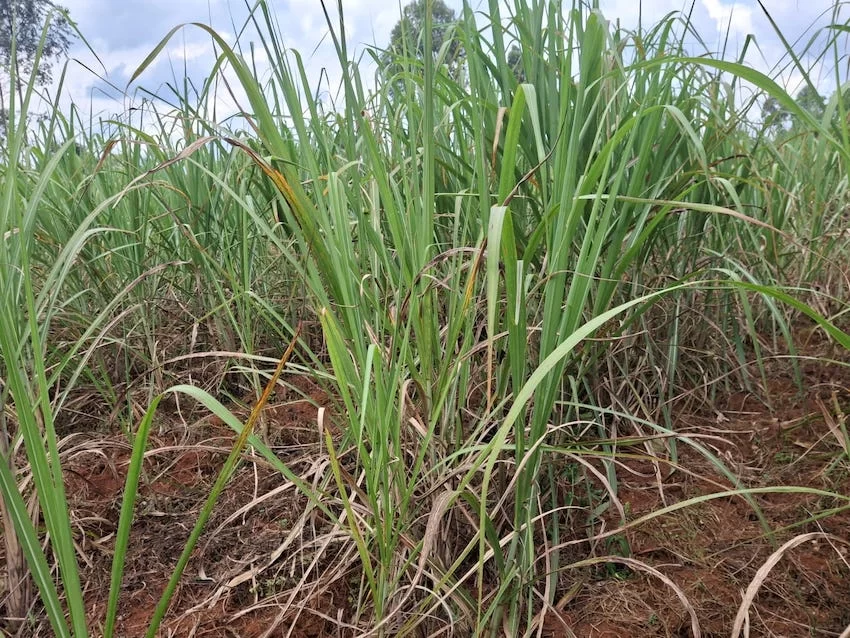
Kenya has finally opened its local sugar industry to duty-free imports from the Common Market for East and Southern Africa(COMESA) Free Trade Area States, after import tariffs that have been in place close to 24 years, to protect its sluggish and inefficient sugar business, lapsed on November 30th 2025.
Kenya Annual Sugar Production and Demand
While Kenya’s annual sugar demand stands at 1.1 million metric tonnes, this far outstrips local production of 800,000 metric tonnes, leaving a huge deficit of 300,000 metric tonnes.
During the safeguards era, production has short up significantly but is yet to keep up pace with demand. A long-term leasing of dilapidated state-owned sugar mills appears to have ended periods of unpaid bills to farmers for cane deliveries, but even with modernization of several mills, production is still sluggish.
Safeguards under Article 61 of the COMESA Treaty, have been in place since March 2002, subjecting all sugar imports from COMESA to Customs Duties.
Kenya imposed import tariffs and other protectionist measures for its sugar industry for the past 24 years, since March 2002 when the Kenya Government first sought assistance from the COMESA Secretariat.
These COMESA safeguards were for an initial period of 12 months and subsequently renewed by the Council of Ministers since then, the last one ending 30th November 2025.
Following launch of the Free Trade Area on 31st October 2000 by members of COMESA, Kenya expressed concern that her sugar sector would not be able to compete against its sugar-producing neighbours.
A list of conditions put on the Government was that it must offload interests in these state-owned sugar mills while allowing them to diversity their operations into producing other products such as ethanol.
State-owned firms were also required to encourage its farmers and supply estates to plant early maturing cane varieties as well as seek for strategic partnerships with other investors.
As matters stand, Kenya’s move towards privatisation of state-owned sugar mills has worked somewhat but production remains elusive.
Kenya Sugar Industry: Options available
Experts have suggested that the only way out for state-owned sugar mills is to consolidate their operations, looking at the strength of each plant and what is strategic.
While the future of Kenya’s sugar industry hangs in the balance, some players appear unperturbed by grim prospects with the COMESA safeguards now lifted.
“We are only worried that duty free imports into the country may not be regulated. At the moment, we are less concerned about the safeguards because we are still producing at a high cost and are unable to compete. We need to be more concerned with privatising and injecting more capital into state-owned mills,” said a manager at a leading sugar mill.
To enhance efficiency of the sugar sector and meet Government of Kenya and COMESA Sugar safeguard commitments, the plan is to privatize all state sugar companies, inject more capital, diversify and introduce early maturing cane varieties.
Available data shows that it costs an estimated $50 million to put up an eco- electricity generating plant and over KSh 500 million to construct water bottling plant or an animal feeds factory using molasses. Most sugar mills cannot execute any diversification plan because of lack of the required capital.
Trials are ongoing at the Kenya Sugar Research Foundation (KSRF) to introduce early maturing cane varieties so as to improve supply to the factories.
A past report on the implementation status of the COMESA sugar Safeguard, lists Public Sector owned sugar companies earmarked for privatization and approved by the Cabinet as Chemelil Sugar Company, Nzoia Sugar Company Limited, South Nyanza Sugar Company Ltd, Muhoroni Sugar Company Ltd and Miwani Sugar Company.
The Country’s domestic production has historically hovered around 550,000 metric tonnes leaving a net deficit to be filled by imports.
With this big deficit to be filled, a number of private sector players have recently identified investment in the sugar sector as an avenue to deploy capital to obtain a reasonable return. The recent entrants to the sector are Kibos Sugar and Butali Sugar Company. At the same time, three factories have been put up namely: Sukari, Transmara, and Ramisi.
Although the attraction of available demand is obvious, Kenya’s sugar industry suffers the challenge of being one of the highest cost sugar producers.
Statistics show that Kenya’s cost of production is way above the world average as well as that of other countries in COMESA.
With expiry of the COMESA safeguard measures, unrestricted amounts of sugar can now be imported into Kenya without attracting any duty.
This means that sugar from Malawian, or Swaziland which is cheaper can access the Kenyan market duty-free, a dreadful prospect for a sluggish sugar sector.
The Kenyan sugar industry is relatively high cost compared to the other countries in the neighbouring countries because of its reliance on small holder production.
Cane growing is rain-fed and most of factories have low factory capacity utilization.
The reliance on smallholders rather than estates as is in the other countries results in higher costs because of greater variability in input use and field preparation, less timely and consistent crop care and higher harvesting and transport costs associated with many small growers.
Higher production costs are also as a result of the taxation regimes in Kenya.
Currently all the sugar factories are situated in Western Kenya which has high altitude of the growing area which results in longer growing cycles of 15-18 months per crop compared to 10-12 months in neighbouring countries.
Lack of irrigation makes the cane vulnerable to drought and reduced yields which raise average cost of production.
Production costs will ultimately determine whether Kenyan sugar industry can compete with duty free and quota free imports from COMESA free trade area.
Industry figures put Kenya’s sugar production costs at double the cost compared to Malawi, Zambia, Sudan, Egypt of even Swaziland.
The Kenyan production costs are nearly double those world’s major sugar exporters and ex-factory prices are about 50per cent higher than import prices from COMESA FTA exporters.
Without major reforms in the industry, Kenya will not be able to compete with more miller that is internationally competitive.
The leased out government owned factories (Chemelil, Sony, Nzoia, Muhoroni) will still face a difficult challenge to compete unless they are well recapitalized besides being leased out to private players.
Private Millers can only compete if cane production costs are reduced as part of the reforms.
Kenyan cane prices currently are one-third higher than can be justified by international prices due to increases in the early 1990s.
Cane transport costs currently account for more than 37 per cent of production costs while poor roads contribute to these costs by slowing the movement of cane hauling equipment and contributing to more frequent breakdowns and equipment deterioration. This in turn add to the cost of transporting cane.












Leave a comment