


KenGen (Kenya Electricity Generation Company) has received approval from shareholders to recalibrate its governance structure while retaining the state’s control. At an extraordinary General Meeting(EGM) held on February 12th, the listed firm resolved to strengthen its board independence, enhance transparency and reinforce minority shareholder protection.
KenGen becomes the first state-owned enterprise to make changes to its governance structures in line with the new Government Enterprises Act 2025, signed into law by President William Ruto on November 21st 2025.
KenGen has introduced amendments to articles of association that introduces a structured, ring-fenced voting framework for the election of independent directors while preserving the Government’s majority ownership and strategic control.
KenGen proposes to cut down its bloated board of directors to bring the number to 9, split ordinary shares into class A and B, appoint two independent board seats with the specific mandate of protecting the interests of minority shareholders, limit the terms under which a director can sit on its board to six years and tighten rules on political appointments to its boardroom.
Independent directors will now play a more defined and substantive oversight role. This strengthens checks and balances at board level, particularly in capital allocation, procurement oversight and long term strategy execution.
Independent directors must resign should they join Government or take up political office. This removes potential conflict of interest and protects the independence of board decisions.
A segregated voting mechanism has been adopted to ensure minority shareholders directly elect independent directors. This prevents dilution of minority voice in board representation.
For the first time, minority shareholders will have structured influence over the selection of independent oversight at board level- a meaningful shift in governance dynamics.
KenGen remains firmly in Government Control
While Government control of KenGen remains intact, the quality of governance has improved, striking a delicate balance between stability and accountability.
Analysts at Ketu Capital hold the view that while ownership control remains with the Government, oversight mechanisms have been strengthened. The market will most likely interpret this as reduced governance discount, improved board accountability and enhanced minority investor confidence.
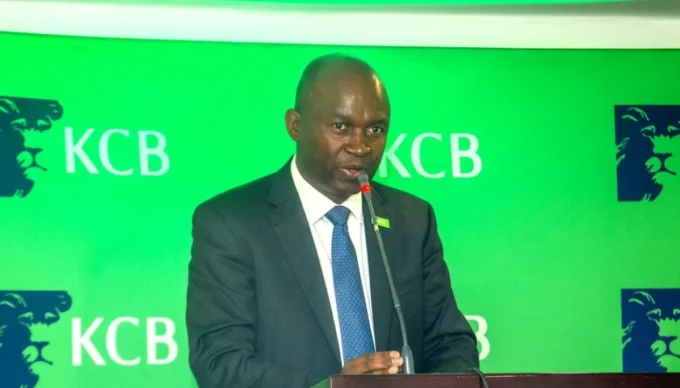
“The all-inclusive governance structure gives management the clarity, confidence and accountability needed to execute and deliver results under our ongoing G2G 2034 strategy Across our portfolio, we are improving plant performance, reducing operational risk and driving cost efficiencies,” said Eng. Peter Njenga, KenGen Chief Executive and MD(Below).

Also corporate governance reforms is Kenya Re whose shareholders have approved amendments to its articles of association. Key proposals include creating Class A and Class B shares or board representation, reducing the board size from 11 to 9, setting three-year term for directors (renewable once) and tightening the criteria for independent directors and disqualification.
Compliance with the Government Enterprises Act 2025 is expected to save taxpayers billions and end decades of mismanagement and political interference and patronage, that has defined the face of many parastatals in Kenya.
This Act aims to enhance the governance, performance and accountability of Government-owned enterprises(GOEs).
With the new law, a number of parastatals and state corporations that will now be required to operate as commercial entities, will have to shave off the bloat in the board of directors and offloading individuals who have earned their positions as a political reward.
A Government-owned enterprise is defined in this act, as a self-financing commercial entity that is either fully owned or at least 50% owned by the Government.
The Act provides a framework for the creation, control, governance, performance and ownership of GOEs and outlines public service obligations that these enterprises must fulfil.
Some of the most common corrupt practices within state corporations and parastatals include embezzlement of funds, bribery, inflating contract prices or awarding tenders to favoured companies, paying salaries to ghost workers, overpricing procured goods, abuse of office by using the position for personal gain and conflict of interest where directors having interests in other companies do business with the state enterprise where they also sit as directors.
ALSO READ: KenGen to Upgrade Masinga Dam, its Largest Hydro Power Plant














Leave a comment