


Kenya is losing out on billions in export earnings every year despite having ready markets for its products, a new study by the Kenya Association of Manufacturers (KAM) as seen by Business Today shows.
Released on Thursday in partnership with the German Embassy in Nairobi and GIZ Kenya, the Exports Competitiveness Study reveals that the country has an unmet export potential of USD 5.3 billion annually.
The report also points to nearly USD 10 billion in wider export opportunities that remain unexploited.
The findings come at a time when Kenya is struggling with a widening export deficit, even though regional and global markets are able to absorb more Kenyan goods.
While launching the report, Peter Njoroge, the Director of External Trade at the State Department for Trade, said the government is committed to strengthening the country’s competitiveness.
“We are strengthening the National Export Strategy to promote value addition and fully access and utilise existing preferential markets,” Njoroge said.
Adding;
“Key reforms include upgrading logistics infrastructure, digitising approvals and trade documentation, enhancing the National Electronic Single Window System, and reducing regulatory overlaps. We are also expanding MSME financing and promoting value addition across tea, coffee, textiles, edible oils, fisheries and livestock.”
KAM’s Head of Policy and Regulatory Advocacy, Miriam Bomett, said the study should serve as a wake-up call for Kenya to close the export gap.
“This report goes beyond analysis as it offers a clear roadmap. Kenya’s markets exist, demand exists, but we must strengthen our competitiveness to seize our share,” she said. “With predictable regulation, stronger value chains and sustained reforms, we can narrow the export deficit and grow our footprint across Africa and globally.”
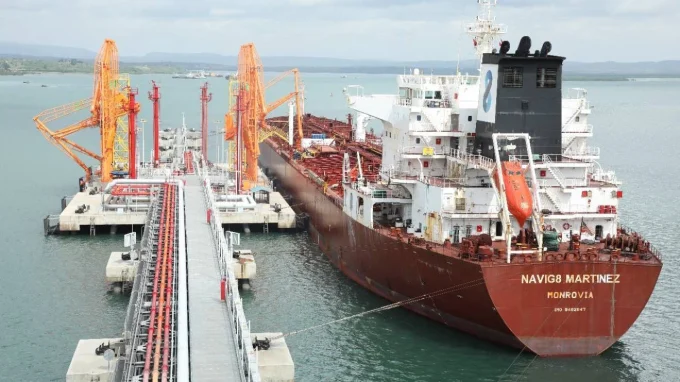
She added that Kenya needs to fast-track reforms to streamline regulations, cut overlapping mandates and expand digital trade systems to speed up approvals. She also called for better efficiency at the Mombasa and Lamu ports, as well as improvements along the Northern Corridor.
“Strengthening SME capabilities, given that they are under-represented in export markets despite high entrepreneurial capacity, is essential,” Bomett said.
German Embassy Deputy Head of Cooperation, Friederike Hemker, said Kenya has major untapped potential but must address long-standing challenges.
“Kenya has a USD 5.2 billion untapped export opportunity. High energy costs, complex procedures and long processes add significant burdens, but Kenya also has remarkable strengths: a vibrant entrepreneurial base, innovation and resilience,” she said.
“If these are matched with targeted reforms, trade can grow rapidly. Germany is committed to supporting Kenyan firms through frameworks such as the Kenya EU-EPA and AfCFTA, while also improving regional logistics through enhanced port efficiency and Northern Corridor upgrades.”
GIZ Kenya’s Director for Sustainable Economic Development, Dr Christoph Zipfel, said value chains are at the centre of export growth.
“The study was informed by the need for Kenya to look at opportunities that lie within intra- and extra-African trade,” he said. “It identifies clear opportunities to enhance competitiveness through improved regulatory efficiency, technology adoption, and strengthened skills development.”
According to the partners, coordinated action between government, industry and development agencies will be key to unlocking the country’s full export potential.









Leave a comment