

When I landed a PR internship gig at a city hospital in 2021, I was first assigned to the accident and emergency (A&E) department. For four months, I saw firsthand how careful planning and razor-sharp preparation enabled our team to respond swiftly when things went sideways—ensuring patients are stabilized quickly and safely. I was amazed at how the A&E team turned chaos into calm, and emergencies into controlled situations. Yet one detail continues to puzzle me: why the nursing assistants were always so quick to change patients into hospital gowns within minutes upon admission?
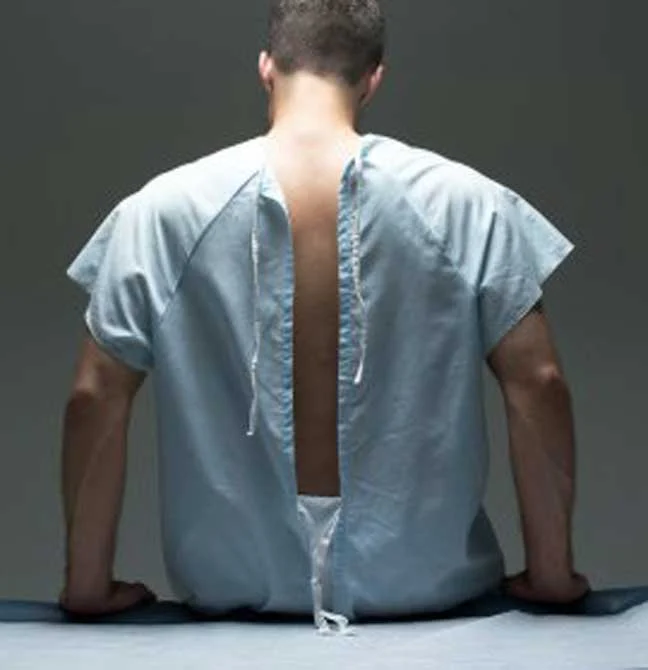
Sometimes referred to as “dignity gowns,” the dignity they provide is relative at best. They don’t come in a wide range of sizes or lengths, and some are open at the back. Patients are often left with exposed skin, underwear or buttocks on display, and a feeling of extreme vulnerability—not to mention the chill, especially when they have no other layers to wear.
We should remember that patients in hospital—even those attending for planned procedures—are often anxious and disoriented in what can feel like a depersonalizing environment. That sense of fear is magnified in emergency admissions involving people who are already ill, frightened, or affected by dementia, delirium, or sensory impairments. These patients may also be in public areas, with other patients and visitors, sometimes of the opposite sex, and might have to walk to toilets, lie on trolleys, or be wheeled down corridors—all while inadequately covered.
Of course, there are times when gowns are necessary—such as in surgery, critical care, or during certain imaging and interventional procedures, where full access to the body is essential. But this doesn’t apply to most patients for the majority of their stay. Yet gowns are often put on reflexively and kept on far longer than needed.
In 2010, fashion designer Ben de Lisi collaborated with the Design Council to create a better-designed gown with side fastenings. It was never widely adopted. More recently, some healthcare facilities like Avenue Hospital Kisumu, have introduced gowns designed with more dignity and comfort in mind. Still, in many places, the “old draughty” version remains the default.
If you’ve ever toured historical prisons like Kodiaga, Lang’ata, Kamiti, Manyani or Shimo la Tewa, you’ll know how inmates were stripped of personal belongings and put into standard-issue clothing—marking a loss of identity. We shouldn’t replicate that transformation in our hospitals. Even something as simple as encouraging patients to wear hospital-issue pyjamas—or better yet, their own clothes—can support recovery. The “End PJ Paralysis” campaign has rightly emphasized that dressing in day clothes and wearing shoes can help restore independence after acute illness or surgery.
A 2019 Lancet paper on the impact of hospital gowns surveyed 928 adult patients and conducted structured interviews with 10. More than half (58%) wore a gown without being sure it was medically necessary. Most found the design inadequate: 61% struggled to put it on or needed help; 67% said it didn’t fit; 72% felt exposed; 60% felt self-conscious; and 57% felt uncomfortable.
Perhaps we should start by limiting gowns to situations where they’re truly necessary—and even then, encourage patients to wear a dressing gown or pyjama bottoms underneath. Wherever possible, we should support the use of personal clothing or more dignified alternatives.
Most importantly, we as healthcare professionals need to ask: why are patients wearing these gowns in the first place?













I once cared for a patient in critical care. Sadly, she didn’t survive, may her soul rest in peace. That experience gave me the appreciation for the simplicity of hospital gowns. In moments where every second matters, their straightforward design truly serves a purpose. While innovation is welcome, it’s important not to overlook the value of that simplicity.