

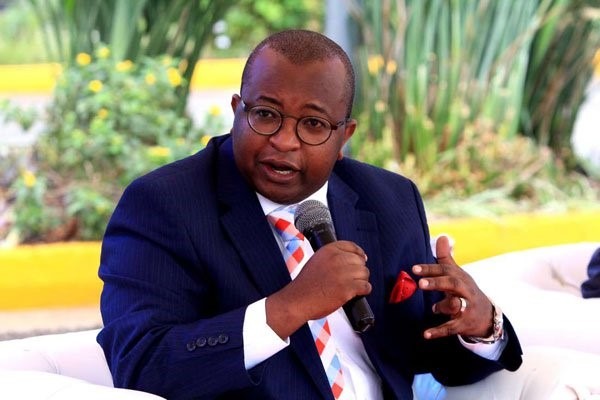
Housing Principal Secretary Charles Hinga has defended the ongoing demolitions in Makongeni, Nairobi, insisting that all bona fide tenants have been compensated and will receive first priority to return as homeowners once the new affordable housing units are complete.
Speaking on Monday, November 25, 2025, PS Hinga said the Makongeni project is part of the broader Nairobi Eastlands Regeneration Plan, a government program launched to modernize ageing estates designed during the colonial and post-independence era.
“The Makongeni demolition is part of a program that we started on what is called Nairobi Eastlands Regeneration. This is after a master plan was undertaken in 2019,” Hinga said.
“What you find in the original Eastlands master plan — it was designed for 17,000 housing units sitting on 3,100 acres. That is poor usage of space. Nairobi is not expanding, but more people are coming.”
KSh150,000 paid to each tenant
Hinga revealed that all 3,600 registered Makongeni tenants signed a consent form after negotiations that tripled the original compensation amount.
“We entered into a very engaging conversation with the tenants,” he said. “I don’t know whether you have ever heard of a situation where a tenant is asked to vacate and then you get paid to leave. Most of the time, the tenants pay the landlord. In this case, we agreed that we are going to pay the tenant to leave.”
He added that tenants were initially offered KSh30,000, but after negotiations, “they negotiated from 30,000 to 150,000. The 3,600 tenants signed a consent.”
Hinga noted that some tenants had illegally sublet government houses without informing those subtenants of the compensation agreement. Although the law does not obligate the government to compensate subtenants, Hinga said the Ministry had chosen to pay them as well.
“Legally, we have no obligation to the subtenants but we have agreed they too will be paid the KSh 150,000 which is equivalent to nine years’ worth of rent,” he added.
Homeowners
PS Hinga said every tenant was issued a unique card that guarantees them priority once the redevelopment is complete.
“Every one of the 3,600 Makongeni tenants were given a card which will act as a ticket for that tenant to be given first priority once the affordable houses are complete. They will now come back as homeowners,” Hinga said.
The government plans to construct 30,000 new affordable housing units in Makongeni, making it one of the largest urban renewal projects in East Africa.
The government plans to construct 30,000 new affordable housing units in Makongeni, making it one of the largest urban renewal projects in East Africa.
The Eastlands Regeneration initiative, unveiled in 2018 and expanded in 2019, seeks to replace dilapidated estates — including Makongeni, Jericho, Bahati, Kariobangi South, and others — with modern, high-density, mixed-use developments.
“Eastlands regeneration is something that is available on the public portal,” Hinga said.
“I would wish every Nairobian should get it and see the future that we are talking about. This is our country; we must determine what kind of a country we want and what kind of a future we want to bequeath to our families.”
Infrastructure overhaul
Hinga said that alongside the housing program, government is modernizing Nairobi’s neglected sewer infrastructure to ensure the city can cope with the population boom of the coming decades.
“Nairobi has a big problem with sewer; we have not invested in sewer for a long time. On both sides of the Nairobi River, we are building two mega trunk systems that are going to future-proof Nairobi for 40 years,” he said.
“We have two treatment plants that are part of the works; it is ongoing.”
Makongeni was built in the 1940s and 1950s to house railway workers. The estate, like many others in Eastlands, is characterized by overcrowded single-storey units, aged, failing sewer lines, frequent water shortages, substandard infrastructure and unregulated subletting and informal extensions.
Housing experts estimate that Nairobi requires over 250,000 new housing units annually, yet only 50,000 are developed, leaving a massive backlog that pushes residents into informal settlements.
The Makongeni redevelopment aims to help close this gap by replacing fewer than 4,000 old units with 30,000 modern homes, including affordable, social, and mortgage-backed housing.
Read: Govt Addresses Concerns Over Makongeni Affordable Housing Redevelopment
>>> Government Breaks Ground on Makongeni Mega Redevelopment as Eastlands Renewal Finally Takes Off











Leave a comment