

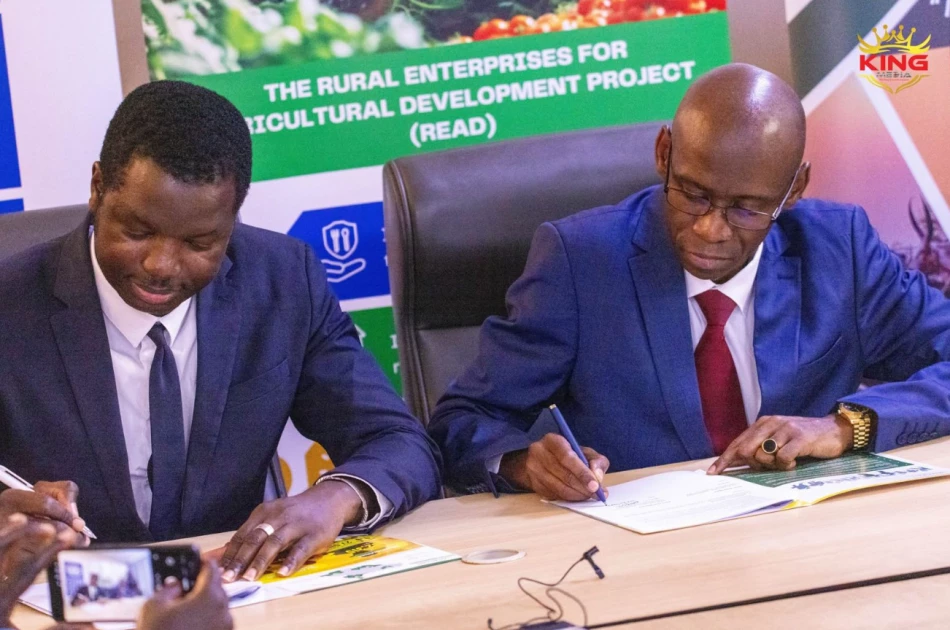
Cooperative Bank of South Sudan has teamed up with the United Nations Development Programme (UNDP) in one of the country’s most ambitious attempts to modernise rural finance.
The partnership is part of the Rural Enterprise and Agricultural Development project, which aims to help thousands of small farmers, women entrepreneurs, and youth-run agribusinesses access formal banking for the first time.
Caroline Mwongera, country director for the UN’s International Fund for Agricultural Development (IFAD), called the agreement a turning point for rural finance in South Sudan.
“This agreement represents a transformational step in strengthening South Sudan’s rural financial systems,” she said.
Adding;
“The project will use credit, cooperative development, and financial literacy as tools for long-term rural transformation.”
The initiative is backed by $20 million (Ksh2.6 trillion) from IFAD, with extra funding from the South Sudanese government, UNDP, Cooperative Bank, and local communities. The total funding now exceeds $25 million (Ksh 3.3 trillion).
The project targets 162,000 people across seven counties, with women making up half and youth accounting for 70 per cent.
For many farmers in South Sudan, formal banking is still out of reach. In towns like Aweil and Terekeka, travelling long distances to a bank is common. Farmers often rely on informal savings groups, handwritten loan records, and unstructured markets.
Evans Kenyi Solomon, a technical adviser at the Ministry of Agriculture, said cooperatives are crucial to bridging these gaps.
“Youth and women empowerment is not a side agenda,” he said. “It is the engine that drives peace, prosperity, and resilience in this country.”
Solomon explained that cooperatives help farmers get better prices, buy seeds or fertilizers in bulk, and build storage facilities to reduce losses after harvest.
Elijah Wamalwa, managing director of Cooperative Bank, said the project is the result of years of planning.
“A journey of a thousand miles begins with one step,” Wamalwa said. “Today marks an important step because we have finally agreed to walk this journey together.”
He added that the bank will expand rural financial services and make credit more accessible.
“We want a future where a farmer in Nimule or Torit can access credit as easily as someone in Juba,” Wamalwa said.
The project also plans to expand agency banking and introduce a mobile-based financial platform.
Ligane Sene, deputy representative and senior economist for UNDP, said the project offers a chance to reduce South Sudan’s reliance on oil and strengthen local agriculture.
“When farmers work in groups, they gain the power of scale,” Sene said. “That is how we move from food imports to food self-sufficiency.”
Sene also noted that the initiative could help the country move toward a cashless economy through a new national payment system.










Leave a comment