


As Kenya prepares to host the 24th Common Market for Eastern and Southern Africa (COMESA) Summit from October 7 to 9 in Nairobi, the government is eager to demonstrate how its Bottom-Up Economic Transformation Agenda (BETA) aligns with COMESA’s vision of a prosperous and integrated Africa.
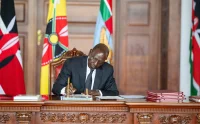
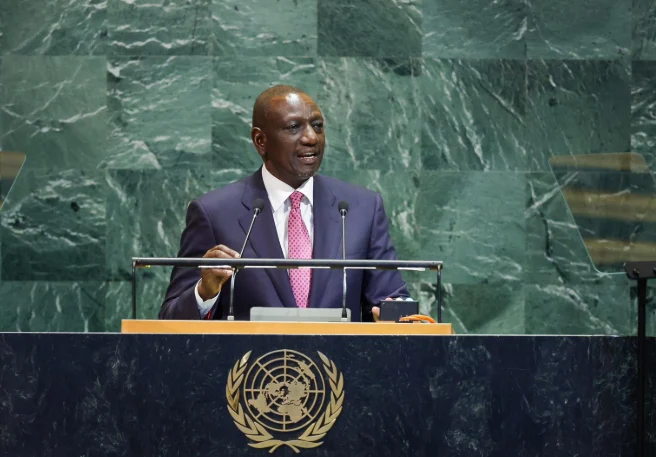
President William Ruto will assume the chairmanship of the bloc, cementing Kenya’s role as a continental economic anchor.
COMESA, a regional economic community of 21 member states with a combined population of more than 600 million, was established to promote Pan-Africanism through trade, value addition, and economic integration. Its goal is to ensure that Africa prospers by trading with itself first, rather than relying solely on external markets.
Kenya as an Investment Hub
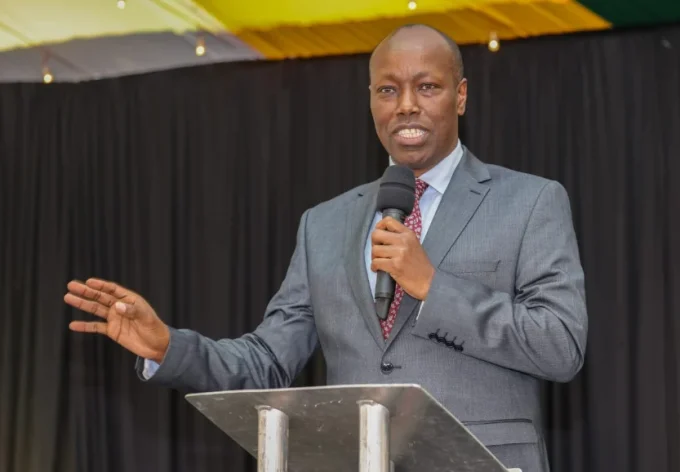
Cabinet Secretary for Trade and Industry Lee Kinyanjui said Kenya is building on its competitive advantages to attract investment.
“Kenya is steadily positioning itself as a global investment hub, backed by a young and educated workforce, affordable labour, and favourable trade agreements that open access to markets in Europe, Asia, and the Middle East,” he said.
Kinyanjui noted that reforms such as digitising services and introducing a uniform licensing bill are cutting red tape.
“Digitising services and reducing human interface is speeding up processes like company registration, making it easier for businesses to grow,” he added.
Farmers, MSMEs, and Industrial Growth
Kenya’s County Aggregation and Industrial Parks (CAIPS), already active in 14 counties, reflect COMESA’s push to connect farmers and small-scale producers to structured markets.
“The government is bridging the gap between major trade agreements and local producers by taking information directly to counties, farmers, and manufacturers,” Kinyanjui explained. “Through this approach, small-scale farmers and value chain players gain clarity on standards, seasons, and market access.”
He further stressed the importance of empowering small businesses.
“Supporting MSMEs is key to building the multinationals of tomorrow,” he said.
Removing Trade Barriers
Kenya and COMESA are pursuing strategies to break down historic trade barriers, including reliance on the U.S. dollar.
“To overcome currency barriers in African trade, countries can now transact using their local currencies instead of relying on the U.S. dollar. This new system is already working, allowing Kenya to trade seamlessly with partners like Morocco in Kenyan shillings,” Kinyanjui said.
He added that strengthening African banks such as Equity and KCB across the region will provide reliable payment systems to support regional commerce.
Youth, Technology, and the Digital Future
Digital trade and youth empowerment remain central to both BETA and COMESA’s integration agenda.
“The power of the Internet and digital trade has made it possible for anyone, anywhere, to sell products to the world right from their backyard or home office,” said Kinyanjui.
Principal Secretary Regina Ombam said Kenya’s youth are key drivers of this change.
“Kenya’s youth are tech-savvy, innovative, and outward-looking, bringing smart solutions to make trade more efficient. From streamlining port systems to easing cross-border cargo movement, their ideas are shaping the future of commerce across the region,” Ombam noted.
A Defining Moment for Africa
Ombam underscored that regional blocs like COMESA are essential in positioning Africa as the next frontier of global trade.
“Regional economic blocs like COMESA play a vital role in driving Africa’s integration by creating larger market spaces. With easier movement of goods and services, trade becomes more effective and beneficial across the continent,” she said.
She added that the Nairobi summit comes at a defining moment.
“As Kenya assumes the chairmanship of COMESA under President Ruto’s leadership, the focus will be on advancing an integrated approach to trade and development for a more outward-looking Africa,” Ombam said.
The summit, last hosted by Kenya in 1999 and 2007, will feature inisterial meetings, EU Connect business forums, exhibitions, and a heads of state session on October 9, 2025. It will also spotlight the African Continental Free Trade Area (AfCFTA) as the next leap in making Africa a competitive global market.
Kenya as Africa’s Economic Anchor
Kenya’s reform pillars—macroeconomic stability, revitalization of value chains, infrastructure development, job creation, and social sector reforms—are in lockstep with COMESA’s objectives. Both emphasize industrialization, value addition, and sustainable trade as the pathway to prosperity.
“The choices we make today—to train youth, formalize traders, build smart borders, and digitize governance—are the stepping stones of a Kenya that will enter its second century not as a lone nation, but as a leader in a united, self-reliant Africa.”
Read: Ruto To Take Over COMESA Chairmanship During Nairobi Summit
>>> COMESA Summit: Quick Facts You Need to Know About COMESA








Leave a comment