

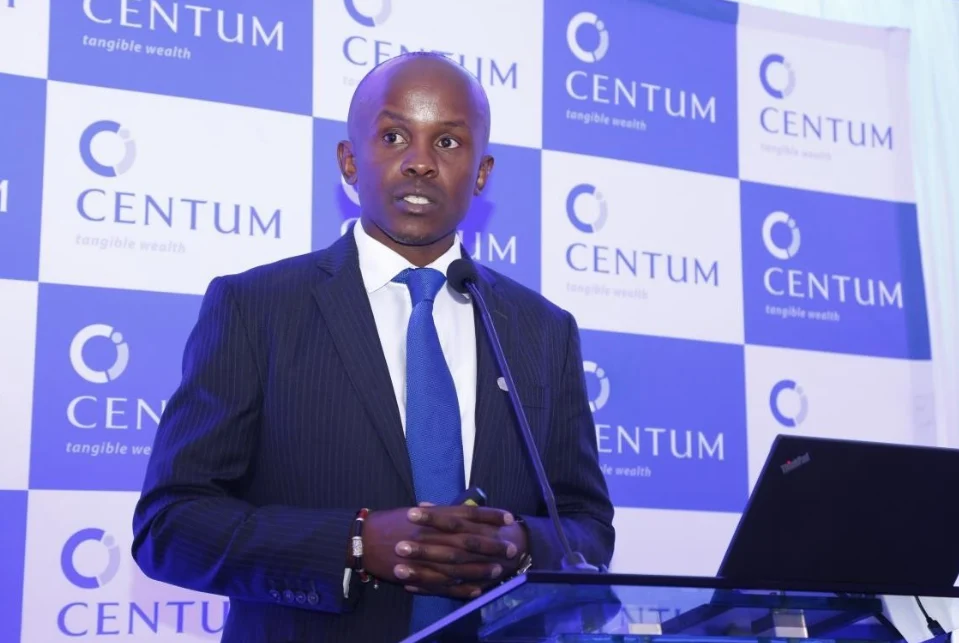
A multi-year effort by Centum Investment Company to buy back its own shares has come to an end, with the company purchasing only a fraction of what it had initially planned.
The investment firm, listed on the Nairobi Securities Exchange, repurchased a total of 10,839,300 shares between February 2023 and March 2026. This is far below its original target of acquiring up to 65.6 million shares, or about 10 per cent of its issued share capital.
The buyback was rolled out in two phases. The first phase, launched in February 2023, accounted for the majority of the purchases, with 10,688,500 shares acquired. The second phase, which began in October 2024 after shareholder approval at the September Annual General Meeting, saw a much smaller uptake of just 150,800 shares.
“All ordinary shares acquired by the company pursuant to the buyback will be held as treasury shares,” Centum said.
By holding the shares as treasury stock, the company retains flexibility on how to use them in future. Such shares can be reissued, used in employee incentive plans, or cancelled altogether, but they do not qualify for dividends or voting while held by the company.
Following the exercise, Centum’s issued shares have reduced to about 644.8 million from slightly over 655 million. Although the reduction is not large, it still has a mild effect of tightening the share base.
The buyback programme had been approved by the Capital Markets Authority and extended in August 2024 before the second phase was introduced. The move was part of a broader capital management strategy aimed at enhancing shareholder value.
In general, companies use share buybacks to signal confidence in their valuation, support their stock price, and improve key metrics such as earnings per share. It can also be an alternative way of returning cash to investors, especially when firms prefer not to increase dividend payouts.
However, Centum’s lower-than-expected uptake highlights the realities of operating in a tight market. The NSE has in recent years experienced low liquidity and cautious investor activity, making it difficult to execute large buybacks without significantly affecting share prices.
There are also internal considerations. Centum has been restructuring its portfolio, focusing more on sectors such as real estate, private equity, and infrastructure—areas that often require significant capital outlay. This may have limited the funds available for the buyback.
The company has also been navigating a broader economic environment marked by currency pressures, rising interest rates, and shifting investor sentiment, all of which can influence how aggressively a firm repurchases its shares.
Even so, the buyback sends a signal that the company sees value in its stock, even if it chose to proceed cautiously rather than aggressively.
With the programme now closed, Centum said it will complete all required statutory filings, effectively drawing a line under the initiative.
While it did not hit its ambitious target, the buyback still forms part of the company’s wider effort to balance shareholder returns with long-term investment growth.










Leave a comment