

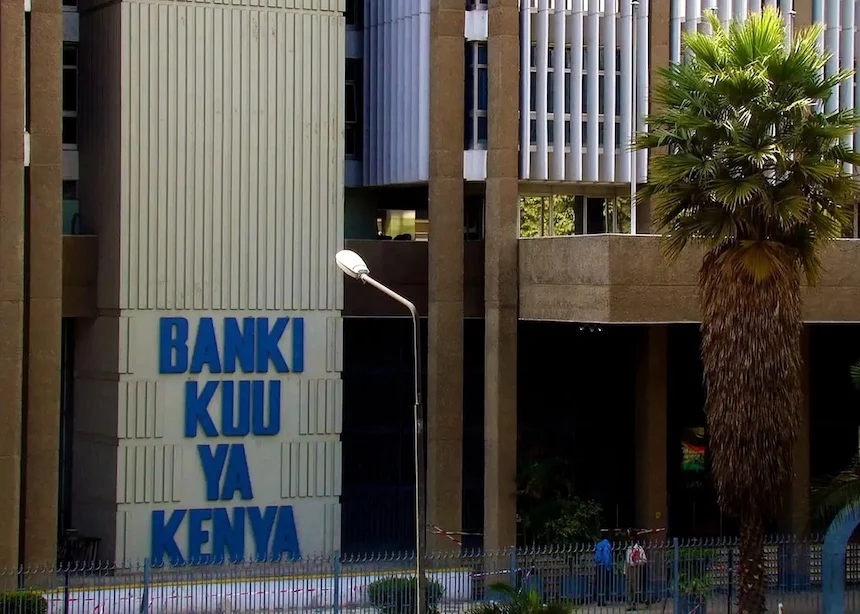
Central Bank of Kenya (CBK) has opened a KSh 15 billion bond switch auction, allowing holders of the 5-year Treasury Bond issued in 2021 and which matures in November 2026, to roll into the longer-dated 15-year Treasury Bond, issued in 2019 and which matures in July 2034. A bond switch auction is basically moving from a bond that us almost reaching maturity to a longer-term instrument that offers higher returns.
According to the Central Bank of Kenya prospectus, holders of the 5-year debt instrument with a coupon rate of 11.277% and which was to mature in the next six months, are being asked to switch to a 15-year Treasury Bond with a coupon rate of 12.34% and matures after 8 years and three months.
The sale period is between February 24th 2026 to March 16th 2026.
Central Bank of Kenya is offering incentives to holders of this instrument, which has a longer duration by offering a higher coupon rate of 12.34% versus 11.277%. The 10 % withholding tax is a lower band compared to 15 % ensuring an improved net yield. The longer duration lock in secures long term yields now.
Investors holding the 5-year bond have an opportunity to realise capital gains if yields decline, the longer term bond will gain more in price. The bond switch offers reduced reinvestment risk by avoiding uncertainty associated with 2026 maturity.
The Central Bank of Kenya has allowed investors to switch part or full holdings via a multi-price auction that will be held this 16th March 2026.
Central Bank of Kenya motive for the Bond Switch Auction
Analysts see the move by the monetary authority as fundamentally a liability management strategy that is designed to ease near-term refinancing pressure.
The November 2026 maturity represents a near-term cash obligation. By encouraging investors to roll forward to 2034, Central Bank of Kenya aims to reduce the amount of principal it must repay in 2026.
This smoothens the government’s redemption profile, lowers short-term funding stress and improves liquidity management.
Kenya, through its fiscal agent, has been actively managing its debt maturity structure following past refinancing pressures. Extending duration reduces rollover risk, improves predictability of debt servicing and strengthens medium-term fiscal planning.
For CBK, longer tenors mean fewer frequent refinancing events — a key stability signal to markets.
If yields are expected to decline amid improving inflation dynamics or monetary easing, it makes sense for the issuer to lock in current funding conditions before rates fall.
The CBK bond switch gives it a positive Sovereign Credit Profile. Credit Rating Agencies usually focus on a Country’s Debt Maturity profile, Refinancing risk, Liquidity buffers and Debt sustainability metrics.
By reducing short-term maturities and extending duration, CBK ensures that refinancing risk declines; debt management credibility improves and that fiscal consolidation efforts appear more structured.
This can support rating outlook stability, particularly after Kenya’s recent external liability management exercises.
While the bond switch auction strategy improves near-term pressure, the CBK commits to higher nominal coupon payments (12.34%) and longer interest servicing period. So the strategy prioritizes cash flow stability today over shorter-term maturity concentration.
Implications of the Central Bank of Kenya Debt Management Strategy
The CBK Bond Switch Auction strategy encourages investors to think duration and signals CBK’s confidence in rate trajectory. This strategy slightly reduces short-term bond supply pressure and support secondary market liquidity in the 2034 benchmark.
Analysts at Ketu Capital view the Bond Switch Auction as a classic duration extension and rollover risk management play. It reflects disciplined debt management — shifting from reactive refinancing to proactive liability restructuring.
For sophisticated investors, the key question is: Do you prefer liquidity and short duration, or higher net yield and convexity in a potential easing cycle?
The Bond Switch Auction strengthens fiscal planning optics and signals improving debt profile management — a constructive macro development if execution remains consistent.
The State fiscal agent is sprucing up its debt management strategies amid mounting pressure from a bulging domestic debt. Available data shows that Kenya’s domestic debt hit KSh 7.05 trillion as at 20th February 2026, driven by aggressive sale of Treasury Bills and Bonds.
Treasury Bonds account for over 81% of domestic debt, while the share of Treasury bills has edged higher, pointing to rising short-term funding pressures.
ALSO READ: Central Bank of Kenya Seeks KSh 50 Bn in February Bond Sale











Leave a comment