

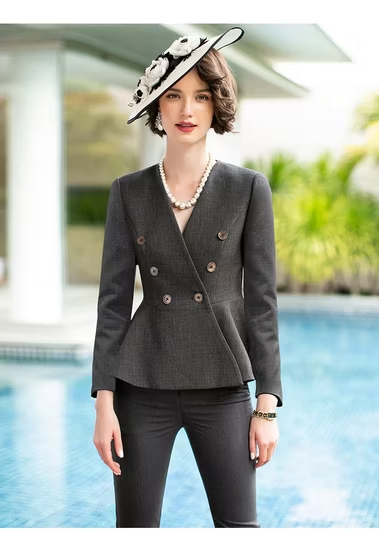
Historically, the Kenyan corporate dress has reflected a colonial inheritance: tailored suits, dark formalwear, and stiff formality. Today, a new generation of professionals is daring to challenge that tradition, opting for “smart casual” codes that feel more flexible, expressive, and attuned to the local climate.
Of course, the weather matters—but so do social expectations around modesty, respect, and professionalism. A Kenyan office wardrobe must negotiate all of this: credibility, comfort, culture, and self-expression.
As workplaces evolve and remote work merges with tradition, the boundaries between formality and identity blur. The question grows more complex: Can professionals maintain credibility while dressing in ways that reflect their Kenyan identity—through textiles, prints, or cultural accessories—without being misunderstood?
In her Vogue Op-Ed, Zadie Smith reflects on the dilemma of dressing “seriously” for one’s profession while still allowing oneself the pleasure of clothes—of risk, of style. Seriousness has long equated to competence, professionalism, and respect for one’s role. Historically, that meant the Western suit: monochrome, restrained, void of personality.
But younger Kenyan professionals are redefining what “serious” looks like. Seriousness no longer demands sameness. It can mean intentionality: purposeful styling that supports your role while expressing who you are.
Kenyan workplaces today are as varied as the people in them. In sectors like banking, law, and teaching, formal dress codes still prevail. Others—especially in tech, media, and the creative economy—embrace more freedom. Understanding your office culture matters: do your homework, then gently bring your own style forward.
Climate and practicality also shape what “professional” means. Nairobi’s warm weather favors breathable fabrics, smart tailoring, and mobility. Remote and hybrid work mean your day may shift between home, office, and client meetings—so choose adaptable pieces you can elevate, such as a blazer or a tailored dress, and switch accessories as needed.
A good rule: smart-casual with intent. Avoid extremes—like overly casual jeans and T-shirts—unless your workplace explicitly allows it.
To dress seriously yet stylishly Kenyan is to dress with purpose. Think of glamour not as glitter but as confidence and cultural resonance.

It could mean a tailored blazer in maroon or deep green instead of black; trousers paired with a printed shirt; or a Maasai-beaded belt adding subtle distinction. A blouse in kitengé print, a locally made bag, or African-print tie can nod to heritage while keeping a professional tone.
Keep one “personality” item in your outfit—something expressive yet balanced by neutral elements. This approach blends the old codes of formality with a new aesthetic rooted in Kenyan creativity.
Bringing Kenyan texture and personality into office dress sends a clear message: my heritage, my self, my culture matter—even in serious spaces. It challenges the old notion that professionalism must equal a Western suit.
The Kenyan fashion industry reinforces this shift. Local tailoring, eco-fashion, upcycling, and the mitumba culture of reinvention all speak to a growing ecosystem of authenticity. Dressing with intention becomes not only a matter of style but of identity and empowerment—particularly in a country where youth dominate the workforce and globalization meets local pride.
Serious and Seriously Glamorous
So yes—you can be serious and seriously glamorous, Kenyan-style. It requires thought, not excess: pieces that support your role while expressing your identity.
Professionalism doesn’t mean suppressing culture; it means showing up with presence, purpose, and authenticity. In today’s evolving workplaces, the wardrobe becomes a tool—for credibility, for comfort, and for self-expression.
Let your tie, your blazer lining, or your kitenge-printed blouse carry both your competence and your culture. That balance—between confidence and tradition, between global and local—is the essence of modern Kenyan professionalism.














Leave a comment