

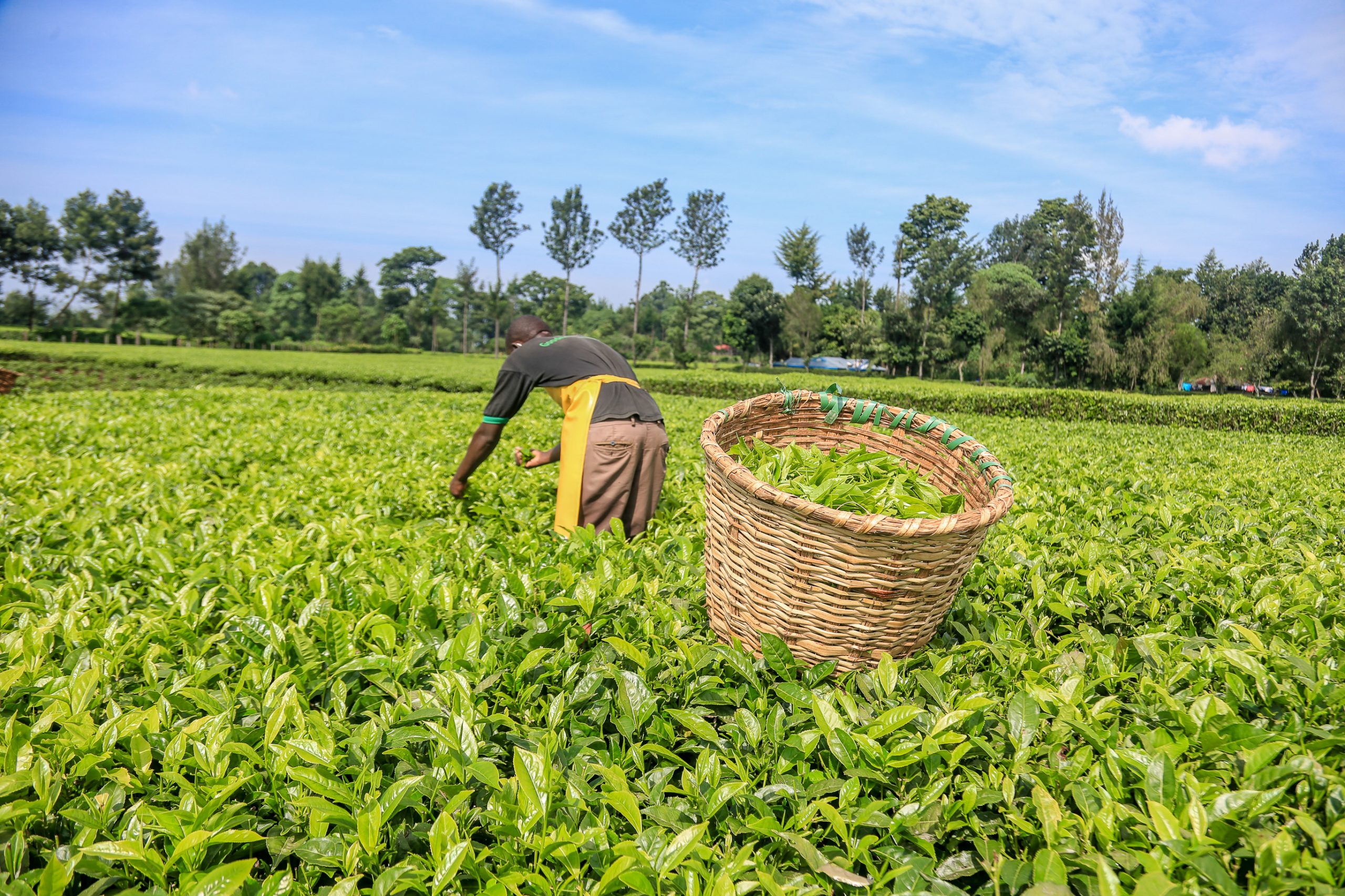
Average tea prices for factories managed by Kenya Tea Development Agency have dropped by 13.3% to USD2.22(Ksh243.89) in the last seven months ending January 2021, as continued high production in the region coupled with global oversupply exerts pressure on the price.
The average price dropped from USD2.56 (Ksh281.24) for a similar seven-month period in the previous financial year as the sector grapples with persistent oversupply and the effects of the Covid-19 pandemic.
Green leaf deliveries by farmers affiliated to KTDA remained high, recording a marginal drop to 726 million kilos in the seven months compared to 770 million kilos delivered for a similar period a year earlier.
“The volume of tea from countries that are served by the Mombasa Auction is still high due to favorable weather in the region. The high production coupled with the high volumes in the global supply chain has kept the prices at the auction depressed,” KTDA Management Services Managing Director, Alfred Njagi, said.
The high tea production in Kenya is majorly a result of favorable weather conditions during the period, besides the rapid expansion of acreage under tea over the years. Data from the Kenya National Bureau of Statistics (2020) also shows that smallholder tea farmers across the country, including those delivering to KTDA-managed factories, have been increasing acreage under tea, which stood at 163,000 hectares in 2019 up from 141,800 hectares in 2018. This has contributed to the increase in tea volumes on offer in the market.

In the last financial year (2019/2020), smallholder farmers under KTDA produced 1.454 billion kilograms of green leaf, up from 1.13 billion kilograms the previous year (2018/2019). This represents a 28.7% increase in production.
READ>>>>>KTDA: Global Glut Has Pushed Down Tea Prices
A global oversupply of the beverage coupled with market disruptions from the Covid-19 pandemic has seen prices continue on a downward trend for a third consecutive year.
Tea prices have been on a downward trend since 2018/19, and this has continued into the current financial year. In 2018, projections from the Food and Agriculture Organization (FAO) indicated continued pressure on tea prices due to increased world production above demand.
KTDA continues to intensify its efforts in reducing the effects of this price drop by improving operational efficiencies to curb costs through several initiatives.
These include investment in small hydropower stations for cheaper power supply, diversification to orthodox teas to reduce reliance on Black CTC teas, and farmers’ training on income diversification and management.












Leave a comment