

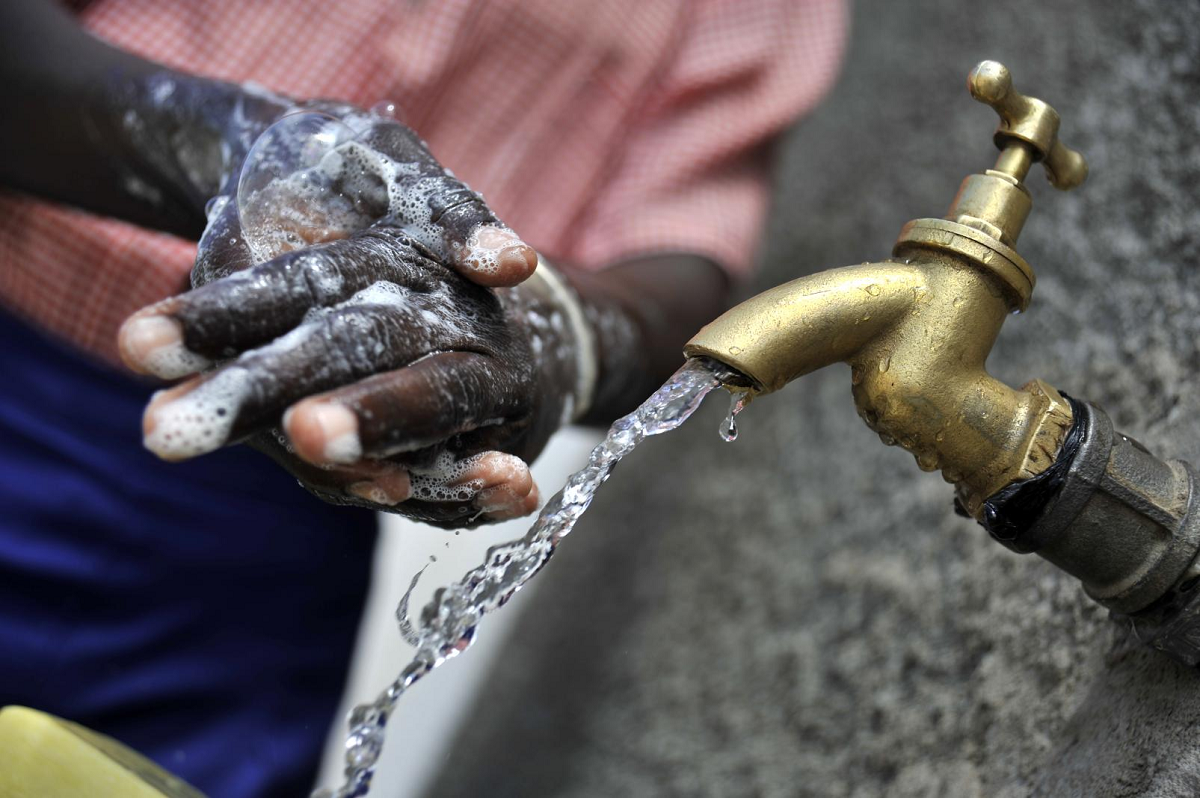
One of the greatest lessons from the COVID-19 pandemic has been how much difference access to a reliable supply of clean water can have on the wellbeing of people. Once again, we are reminded that water is indeed life.
In addition to the now ubiquitous alcohol-based sanitizers, public health experts encourage regular washing of hands with clean water and soap as an effective way of combating the spread of the highly contagious coronavirus. Basic as it may sound, handwashing is now recognized as one of the first lines of defense against COVID-19 and other contagious diseases.
Basic hygiene
Handwashing is not only cost-effective, it is also less prone to stockouts and price hikes, unlike sanitizers. Properly done, it has the potential to prevent infection and keep communities safe.
To encourage basic hygiene, handwashing points with a constant supply of clean water and soap have been installed at many public points across the country. These facilities should ideally be a constant feature of public places, and not just a response to pandemics such as the coronavirus.
Supported by other basic hygiene practices, similarly small actions could dramatically reduce the prevalence of waterborne diseases around the world.
Unfortunately, communities in many parts of the world, especially in Africa, still grapple with limited access to clean water. In fact, according to UNICEF and the World Health Organisation (WHO), there were an estimated 315 million people in sub-Saharan Africa without access to basic water services in 2017, up from 227 million in the year 2000. Majority of these people reside in rural areas and informal settlements in urban areas.
Globally, one in three primary schools do not have handwashing facilities. In Kenya, official government statistics estimate access to safe water at about 63% nationally. This means that two out of five people in the country do not have safe water for drinking, washing hands and other domestic uses. These are grim statistics.
READ ALSO >> Bill Gates Drinks a Whole Glass of Sewer Water!
How can households without easy access to a regular supply of clean water protect themselves from Coronavirus? Without ample access, behaviour change campaigns to encourage handwashing as a strategy against the spread of the disease will do little to move the needle.
Attaining and maintaining universal access to safe water is a critical step towards combating the Coronavirus pandemic and other communicable diseases. This is why governments around the world have committed to work towards delivering safe water, sanitation and hygiene to all by the year 2030, as part of the Sustainable Development Goals.
Recycling and reuse
Access to safe water needs to be extended to communities that currently have no or limited access to this important commodity. This can be done by extending the water pipeline or sinking wells and boreholes.
To complement those efforts, there is need for initiatives that encourage recycling and reuse of water while minimizing wastage in order to replenish water resources safely. Factories and other plants that extract and utilise significant amounts of water need to be encouraged to build water recycling and reuse strategies into their operations.
Without ample access, behaviour change campaigns to encourage handwashing will do little to move the needle.
Combined, this will ensure that more water is available for communities and households across the country and the rest of the world. It calls for collaborative efforts that bring together different partners for the sole purpose of sustainably enhancing access to safe water today and into the future.
SEE >> Surviving Covid-19: What Business Can Do
Over the years, Amref Health Africa has partnered with businesses to extend access to safe water. Our long-standing partnership with Kenya Breweries Limited has seen us set up community water projects across the country. So far, we have provided safe water for communities living in Kiaoni (Makueni County), Mbomboini (Kiambu County), Lukume (Kakamega County), Maaini (Kitui County), Kieni (Nyeri County) and Sakutiek (Narok County), among others.
Fighting the Coronavirus pandemic and keeping communicable diseases at bay is our collective responsibility. Businesses are a critical cog in addressing the global water crisis and its attendant risks and have a responsibility to support global health campaigns that can save the lives of millions of people. This is a firm foundation for campaigns to promote handwashing.
It makes business sense for companies to invest in the wellbeing of people. It is not just a nice thing to do; it is the right thing to do.














Leave a comment