

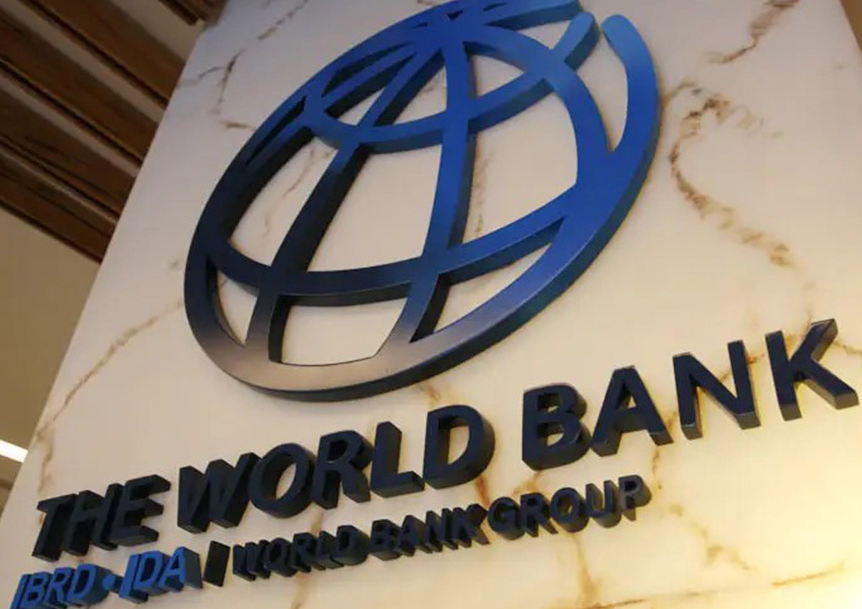
World Bank has warned that corruption is draining billions of shillings from Kenya’s economy every year, with bribery, fraudulent schemes and inflated government contracts costing the country between 1.2 per cent and 4 per cent of its Gross Domestic Product (GDP).
In its latest Kenya Economic Update released on Wednesday, November 4, 2026, the lender identifies corruption and weak governance as major obstacles to economic growth, investment and job creation.
The report explains that the losses arise from several activities, including bribes paid to access public services, fraudulent arrangements involving public and private entities, and inflated prices in government procurement.
These practices increase the cost of running government operations while reducing the amount of money available for essential services and development projects.
The lender also estimates that corruption and collusion may have increased Kenya’s annual fiscal deficit by approximately two percentage points of GDP through higher public expenditure and reduced revenue collection.
This means the government faces additional financing requirements to meet its obligations, increasing pressure on public borrowing at a time when debt repayments already consume a significant share of national revenue.
The impact is particularly significant because Kenya relies on borrowing to finance infrastructure, government operations and public services. When money is lost through inflated contracts, fraudulent payments and weak revenue collection, the Treasury has to find additional resources to cover the resulting gaps.
The World Bank says this creates a cycle in which corruption increases government borrowing, raises the cost of financing public projects and leaves fewer resources for development.
Public procurement is one of the major areas identified in the report. Government contracts involve substantial amounts of public money, making transparency and competition important in controlling expenditure.
The lender warns that weak procurement systems create opportunities for inflated contract prices, collusion and preferential treatment of companies. Such practices can increase the cost of infrastructure projects and reduce the value taxpayers receive from public spending.
Corruption is also affecting private businesses, with companies facing additional costs when dealing with public institutions.
The proportion of Kenyan firms identifying corruption as a major or severe business constraint increased from 25 per cent in 2013 to 39 per cent in 2025.
Additionally, 36 per cent of businesses reported receiving at least one request for a bribe in the preceding year.
The World Bank warns that bribery increases the cost and uncertainty of doing business, making it harder for companies to invest, expand operations and employ more workers.
Businesses that encounter corruption also face difficulties competing fairly, particularly when public opportunities and services are influenced by unofficial payments rather than established procedures.
The lender estimates that improving control of corruption to levels recorded in countries such as Ethiopia or India could make Kenya’s economy more than 13 percentage points larger by 2035 compared with maintaining the current situation.
More ambitious reforms could raise GDP by more than 20 percentage points, while household consumption could increase by up to 27 per cent.
The reforms could also create better employment opportunities for up to 7.7 million people.
These figures are based on economic modelling and represent potential gains compared with a scenario in which existing governance weaknesses continue. They are not guaranteed outcomes.
To address the problem, the World Bank recommends stronger enforcement of anti-corruption laws, transparent public procurement and improvements in revenue administration.
It also calls for better accountability in public institutions and measures to ensure that public resources are used for their intended purposes.
National Treasury Principal Secretary Chris Kiptoo has pointed to government measures such as digital tax administration through the Kenya Revenue Authority, e-Citizen services, electronic government procurement and the Integrated Financial Management Information System (IFMIS).
These systems are intended to improve the monitoring of public funds, reduce manual transactions and limit opportunities for financial manipulation.
The World Bank’s warning comes as it projects Kenya’s economy to grow by 4.6 per cent in 2026, up from its earlier forecast of 4.3 per cent following stronger-than-expected economic performance in the first half of the year.
However, the lender maintains that addressing corruption will be important in sustaining growth, improving public finances and creating an environment where businesses can operate and expand.









Leave a comment