

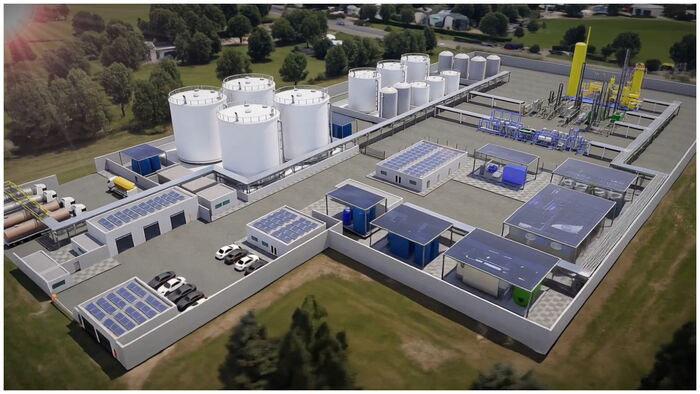
Kenya Airways (KQ) and French-based Rubis Energy Kenya have signed a landmark deal to establish Africa’s first dedicated Sustainable Aviation Fuel (SAF) refinery in Nairobi.
This project aims to transform locally sourced waste into cleaner jet fuel, marking a major step toward decarbonizing the continent’s aviation sector.
The refinery will be located near Jomo Kenyatta International Airport (JKIA) and is expected to produce 32,000 metric tonnes of SAF annually. The facility will process waste cooking oil, animal fats, and other agricultural residues into biofuel.
The project is estimated to cost approximately KSh10 billion. Dragonfly, the technology provider, intends to bring the facility online within 24 months.
A memorandum of understanding to develop what will be Africa’s first dedicated sustainable aviation fuel refinery, was signed in the presence of Kenya’s President William Ruto and French President Emmanuel Macron.
The refinery is expected to have a production capacity of 32,000 metric tons, with a project investment estimated at 60 to 70 million euros (US$70.5 million to US $82.2 million), the two companies said in a joint statement.
The agreement was signed in the presence Kenya’s President William Ruto and Emmanuel Macron of France, the companies said. KQ is introducing Sustainable Aviation Fuel (SAF) on select flights to cut lifecycle CO₂ emissions while keeping the journey just as safe and seamless as ever.
SAF is a certified jet fuel made from sustainable sources like used cooking oil and agricultural residues. It’s blended with regular jet fuel and meets the same strict safety standards—so your flight experience doesn’t change, but the climate impact can.
Compared with fossil jet, SAF can deliver significant lifecycle CO₂ reductions (pathway-dependent), helping aviation decarbonize faster. When a flight uses SAF, its lifecycle emissions go down versus flying on fossil jet alone. For almost 35 years, Rubis has grown substantially to become a recognised specialist in the energies sector. The Group has put in place an ambitious growth strategy based on both organic growth and a dynamic policy of targeted acquisitions.
Aware of the energy sector’s key contribution to combating climate change, Rubis is diversifying its activities and its offering towards low-carbon solutions. Rubis is involved in providing energy safely and in the best possible economic conditions, through its various businesses: Energy Distribution (Rubis Energie) and Renewable Electricity Production, that are essential to populations and the functioning of countries.
Rubis Energie in East Africa runs a strong network of 513 strategically and conveniently located service stations. The oil marketer provides an advanced fuel technology, UltraTec, to customers that ensures improved fuel and engine efficiency. The firm handles the refuelling of most major passenger and cargo airlines at international airports in Nairobi and Mombasa. Its services meet the International Air Transport Association (IATA) standards of into-plane refuelling procedures and guidelines.
The Rubis Energy Mobile App allows customers to locate stations, order Rubis Gas and make payments easily from the convenience of the phone. Rubis Card is a fuel management system that gives motorists total control of their fuel-related expenses. It is based on smart card.











![The expressway is a 27-kilometre toll road running from the Jomo Kenyatta International Airport (JKIA) to Westlands, Nairobi. [Photo/ NMG]](https://businesstoday.co.ke/wp-content/uploads/2022/05/images-67.jpeg)


Leave a comment