

Business ambition often begins with optimism. Plans are drawn, investors are convinced, loans are secured, and the future looks polished on glossy architectural designs. Yet in the world of finance, optimism alone does not settle accounts. Contracts do. And when the numbers stop cooperating, even the most well-connected entrepreneurs find themselves facing the stern mathematics of debt.
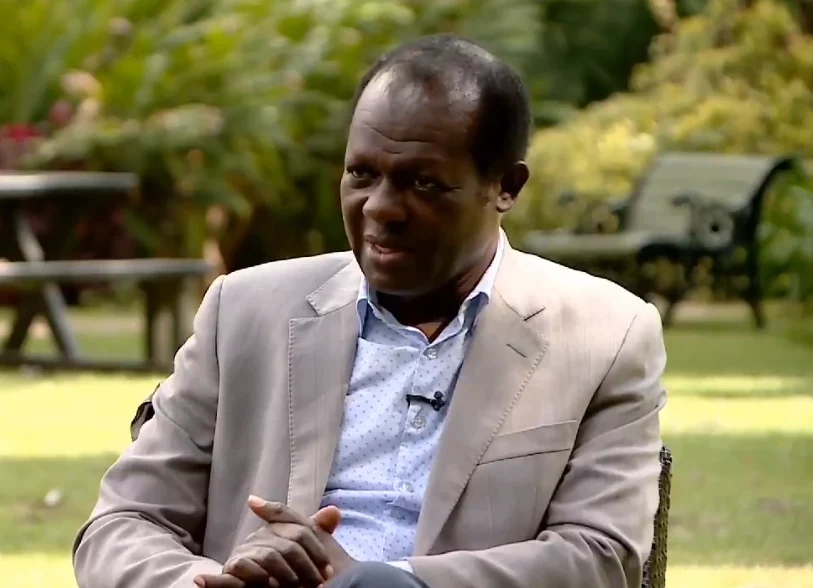
That reality is currently playing out in the long and complicated financial battle involving former Cabinet Secretary and businessman Raphael Tuju.
Once a familiar figure in Kenyan politics and media, Tuju now finds himself at the centre of a prolonged commercial dispute that has stretched across courtrooms in Kenya and the United Kingdom, involving billions of shillings, prime Nairobi property, and one determined lender seeking repayment.
Tuju and his ambitious vision
The genesis of Tuju’s troubles traces back to 2015 when his company, Dari Limited, secured a loan facility from the regional lender East African Development Bank (EADB). The facility, valued at roughly $9.3 million (Ksh1.2 billion), was meant to finance a high-end real estate development in the leafy suburb of Karen in Nairobi.
The project centred around the tranquil sanctuary known as Entim Sidai Wellness Sanctuary, a lush property set within more than 20 acres of forested land. Plans included constructing luxury villas and expanding hospitality facilities aimed at affluent clients seeking exclusivity and wellness experiences.
The business logic seemed sound on paper. High-end housing developments in Nairobi’s premium suburbs have historically attracted wealthy buyers and expatriates willing to pay for privacy and comfort. Tuju’s plan involved constructing twelve upscale two-storey villas, each projected to sell at around Ksh 100 million. The sales, in turn, were expected to generate the revenue needed to service and eventually repay the loan.
In essence, it was a classic property-development model: borrow, build, sell, repay, and hopefully profit along the way.
But as any developer will quietly admit, real estate projects rarely unfold exactly as the spreadsheet predicted.
Where the plan began to fray
According to court records, the relationship between borrower and lender began to deteriorate after the project stalled and loan repayments fell behind schedule. By 2017, the facility had fallen into default.
From that moment, what had begun as a straightforward commercial loan slowly evolved into a multi-year legal struggle.
Part of the disagreement revolved around the structure of the financing itself. Evidence presented in court indicated that the loan arrangement was divided into phases. While approximately $9.1 million was disbursed to facilitate the purchase of the Karen property, a second tranche of Ksh 294 million meant for the construction of the villas was never released.
Tuju has argued in court that the withheld funds disrupted the project’s cash flow and made it difficult to proceed with the development as initially planned. The bank, on the other hand, has maintained that the remaining funds were not disbursed because the borrower had already breached key terms of the loan agreement.
As often happens in commercial disputes, both sides interpret the same contract through very different lenses.
Legal battle
The financial dispute soon escalated into a complex legal contest involving courts in more than one jurisdiction. In 2019, the High Court of Justice in England and Wales issued a summary judgment ordering repayment of more than $15 million (Ksh1.9 billion) under the facility agreement.
That decision did not remain confined to London. In 2020, the ruling was recognised and registered by the Kenyan High Court, effectively allowing the lender to pursue recovery using Tuju’s assets within Kenya.
From that point forward, the matter moved through various levels of the Kenyan judicial system, including the Court of Appeal and eventually the Supreme Court. Several rulings upheld the lender’s right to enforce the security attached to the loan.
During the same period, Tuju and his companies continued to challenge aspects of the enforcement process, including property valuations and the legality of certain notices issued during the recovery process.
The result has been a legal marathon that has stretched for years, with filings, appeals, injunctions and counter-arguments appearing with remarkable consistency.
Auction hammer draws closer
While the legal battles continued, the financial pressure steadily mounted. Interest accumulated, legal costs increased, and the outstanding debt expanded significantly.
Today, the bank is seeking to recover more than Ksh 4.5 billion through the sale of properties used as collateral for the loan.
Among the assets caught in the dispute are the Entim Sidai sanctuary and other commercial properties linked to Tuju’s businesses in Karen and along Ngong Road.
The consequences have already begun to materialise. In October 2024, the well-known Dari Coffee and Garden restaurant—one of the properties associated with Tuju’s enterprises was auctioned to a buyer for approximately Ksh 450 million after a court allowed the lender to proceed with recovery efforts.
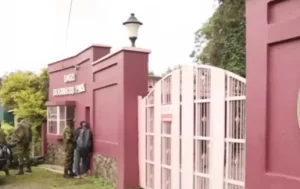
Other properties have also faced potential auction as the lender attempts to recover the outstanding debt.
In March 2026, a High Court ruling removed earlier orders that had temporarily blocked the auction process, allowing the lender and appointed auctioneers to proceed with the sale of the secured properties.
In simple business terms, the lender is now exercising its contractual right to recover money through the collateral that backed the loan.
The long-running legal and financial dispute involving Raphael Tuju reached a dramatic turning point on Saturday, March 14, 2026, when enforcement officers executed court orders linked to the recovery of properties tied to the multi-billion-shilling loan dispute. According to multiple news reports, armed officers entered his Karen property in the early hours of the morning, with accounts indicating the operation took place at approximately 2:00 am. to 3:00 am.

Tuju stated that officers arrived at his premises during the night and removed his security personnel before occupying the compound. He claimed that the officers did not present a court order at the time of the operation, describing the incident as an unlawful eviction.
The quiet lessons beneath the headlines
Strip away the politics, the personalities and the courtroom drama, and the Tuju saga becomes something surprisingly familiar in the world of business.
It is a story about leverage.
Property development often relies heavily on borrowed capital because building projects require large upfront investments long before revenue appears. When the market cooperates and sales happen quickly, debt can accelerate wealth creation. But when projects stall, or timelines stretch, the same debt becomes a heavy anchor.











Leave a comment