

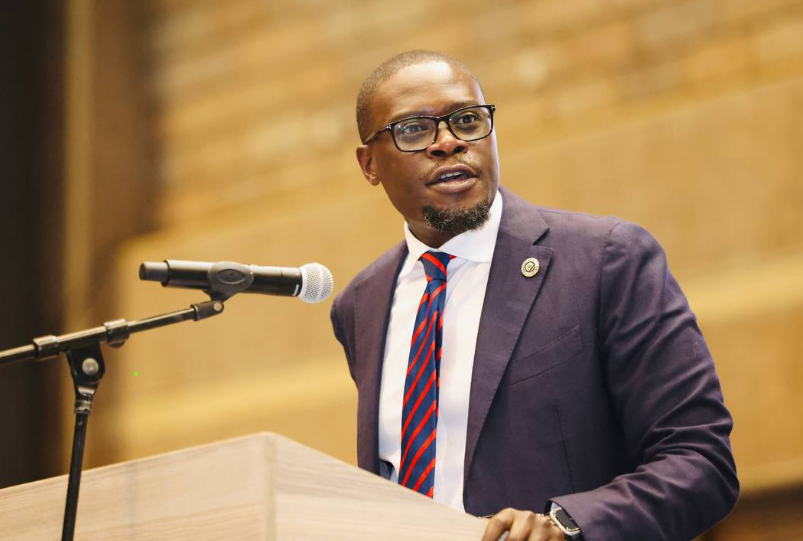
Fresh plans to overhaul Nairobi’s struggling water and sewer systems are now on the table after the county government unveiled a Ksh 38.1 billion investment aimed at improving access to clean water and modernising sanitation infrastructure across the capital.
The funding will go into a wide range of water and sewer projects under the Nairobi Rising programme, an Ksh 80 billion urban renewal plan being implemented jointly by Nairobi City County and the national government.
City officials say the programme is intended to respond to the growing pressure on Nairobi’s infrastructure as the population edges closer to six million people.
For years, residents in many neighbourhoods have faced unreliable water supply, while large parts of the city still lack proper sewer connections.
The new investment will focus on expanding water transmission pipelines, improving distribution networks and increasing the number of households connected to the main supply.
One of the key projects involves upgrading the Ngethu–Gigiri water transmission pipeline, a major line that delivers water from treatment plants to parts of the city.
Authorities are also planning to extend last-mile water connections to more homes and businesses, particularly in estates where residents rely on water vendors due to limited supply.
On the sanitation side, the county plans to build a 27-kilometre trunk sewer line along the Nairobi River corridor. The sewer is expected to collect wastewater from different parts of the city and direct it to treatment facilities instead of allowing it to flow into rivers.
A new sewer treatment plant will also be constructed in Kariobangi as part of efforts to improve wastewater treatment and reduce pollution in the Nairobi River basin.
City officials say expanding sewer networks will help serve more densely populated neighbourhoods that currently rely on unsafe sanitation systems.
Nairobi flash floods
The push to upgrade water and sanitation infrastructure comes at a time when Nairobi has recently experienced severe flooding after heavy rains.
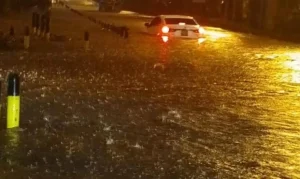
During the weekend of March 6 and March 7, several roads across the city were flooded after drainage systems failed to handle large volumes of stormwater. Vehicles were stranded on flooded roads while some residents were forced to wade through water to access their homes.
The floods also damaged sections of water pipelines near river crossings, disrupting water supply in areas including Buruburu, Kariobangi, Dandora, Eastleigh, Kiambiu and Korogocho.
The Nairobi City Water and Sewerage Company said its engineers had been deployed to repair the damaged infrastructure.
“We urge our customers to remain patient as we work around the clock to restore the water supply. Our teams are committed to resolving these disruptions as swiftly as possible,” the utility said.
Urban planners say the flooding highlights the urgent need for better drainage systems, improved sewer networks and restoration of river corridors to manage storm water.
Beyond water and sanitation, the Nairobi Rising programme also includes other urban improvement projects.
Under the Safe Streets component, about Ksh 23.1 billion will be spent on upgrading roads, building bridges, improving pedestrian walkways and installing about 40,000 streetlights across Nairobi.
The programme also seeks to reorganise informal trade by relocating an estimated 300,000 street vendors into designated market spaces in different parts of the city.
Environmental restoration is another part of the initiative, with plans to rehabilitate river corridors and introduce green infrastructure to improve the city’s resilience to flooding.
Implementation of the programme will be overseen through a joint structure involving both the national government and Nairobi City County.
However, the cooperation agreement behind Nairobi Rising is already facing a legal challenge at the Milimani High Court.
Petitioners argue that the arrangement could undermine functions assigned to county governments under Kenya’s devolution framework.














Leave a comment