

By Chetan Ratna
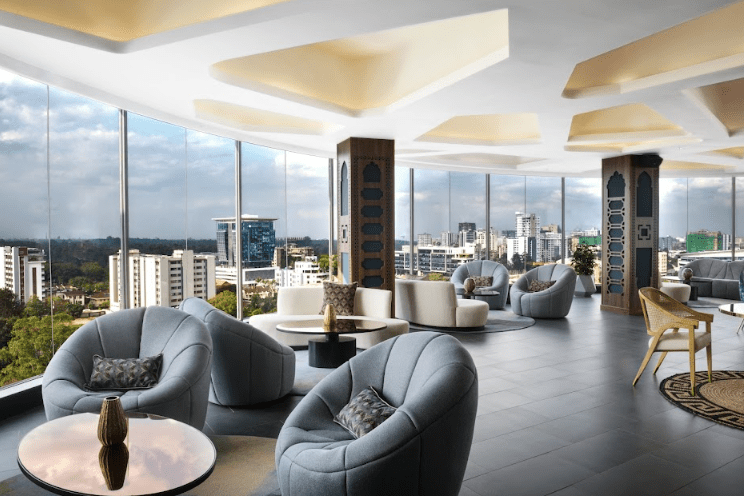
Today, the hospitality industry is in the middle of a big shift. Hotels aren’t just places to stay anymore, they’re expected to be smart, sustainable, and deeply in tune with guest preferences. This has, of course, been caused by the wide-scale adoption of technology in different sectors globally.
With rising energy costs, increasing digital adoption, and growing pressure to meet sustainability goals, hotel owners have a lot to think about.
Globally, the conversation has shifted from energy efficiency to hyper efficiency. Guests are no longer satisfied with just a room and working air conditioning. They now expect personalized experiences – room temperatures adjusted to their preferences before they arrive, automated lighting and air quality that adapts to occupancy, and seamless digital interactions throughout their stay. This evolution toward guest-centric design is shaping the new standard of hospitality.
East African hotels are responding to these global trends, albeit at a different pace. The high cost of electricity in the region makes energy efficiency more than a nice-to-have; it’s now becoming a business imperative. Key systems like HVAC and boilers are major energy consumers, and upgrading these with digitized controls is the low-hanging fruit for cost savings.
Resilience Is Revenue
One of the most pressing challenges for hotels, especially in East Africa, is maintaining uninterrupted operations. Downtime, even for a few hours, results in immediate revenue loss. Traditionally, hotels have relied on diesel generators for backup, but that model is no longer sustainable. Today, we’re seeing a shift toward integrated energy systems combining grid power, solar, batteries, and generators. These systems don’t just provide backup, they offer resilience, the ability to quickly and intelligently switch between energy sources.
Smart Energy
Smart energy solutions start with visibility. Hotels need to monitor where energy is being consumed, and that’s where IoT-enabled devices come in. Whether it’s a boiler, an AC unit, or an entire room management system, being able to communicate across systems allows for optimization at scale. At Schneider Electric, our Building Management Systems (BMS) and microgrid solutions can anticipate shifts in energy supply (like cloud cover affecting solar generation) and adjust accordingly — switching to battery storage or another source as needed.
This kind of predictive intelligence is key to reducing a hotel’s carbon footprint, not just through conservation but through coordination.
Automation For Guest Experience
Automation isn’t only about efficiency, it’s about elevating the guest experience. Consider indoor air quality: hotels often ignore indicators like carbon dioxide levels or air particle content. Smart systems can now monitor and adjust these in real time, improving comfort and wellbeing.
Imagine walking into your room and everything is already set to your preference. From the temperature and lighting to even the scent. Imagine navigating the hotel using your phone, unlocking your room with a tap. These aren’t futuristic fantasies. They’re increasingly within reach through automation.
Why Are We Not Investing In This?
Many hotel owners still hesitate to adopt smart technologies due to upfront costs. But this perspective misses the full picture. The true cost lies in operations. A manual switch might be cheaper to install, but if guests leave the lights on, there’s no way to detect or respond. Smart systems not only offer control, they enable insight. The ROI comes from reduced consumption, predictive maintenance, and long-term savings.
Another misconception is the belief that maintaining smart systems requires specialized staff. While it’s true that a certain skill level is required, increased efficiency and data-driven decision-making more than justify the investment.
What The Future Holds
The future of hotel energy management is getting smarter, smaller, and more accessible. Automation is no longer just for the big players. We’re seeing a move toward smart spaces where everything from LED lighting to kitchen appliances are designed for efficiency. The OEMs are catching on too, introducing more efficient HVAC systems and equipment every year.
And yes, AI is coming. It’s already being used to analyze BMS data in the cloud, identify patterns, and recommend actions. While fully AI-powered hotels might still be a few years away, the path is being paved now.
The hospitality industry doesn’t just need to be efficient; it needs to be intelligent. Automation and smart energy aren’t luxury upgrades anymore. They are strategic imperatives for a resilient, guest-centric, and sustainable future.
Chetan Ratna is the Segment CIB and Prescription Leader East Africa, Schneider Electric.
Read: Schneider Electric Appoints Canninah Dladla as Cluster President for English-Speaking Africa
>>> Schneider Electric Introduces Climate Smart Village Solution to Africa











Leave a comment