

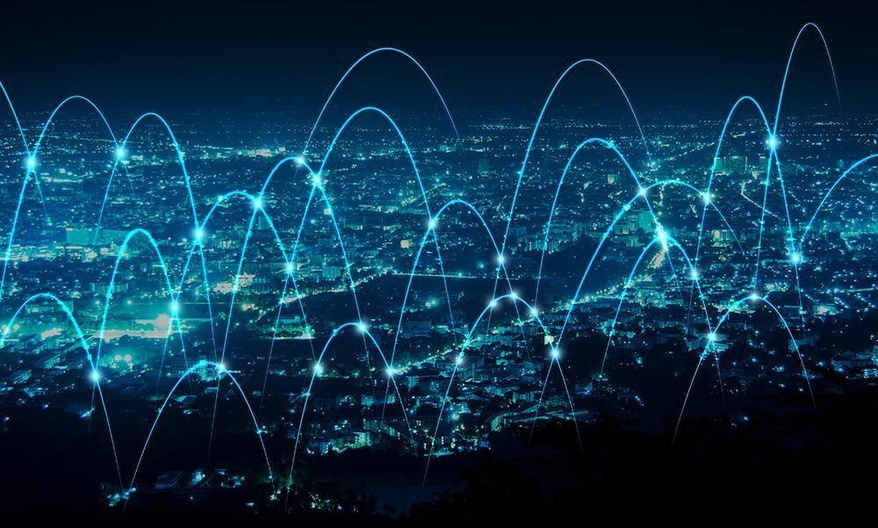
The November 2020 edition of the Ericsson Mobility Report reveals that mobile data traffic in Sub-Saharan Africa is estimated to grow by almost 6.5 times the current figures, with total traffic increasing from 0.87EB per month in 2020 to 5.6EB by 2026. Meanwhile, average traffic per smartphone is expected to reach 8.9GB over the forecast period.
As the demand for capacity and coverage of cellular networks continues to grow, service providers are expected to continue investing in their networks to cater to this uptake and meet evolving consumer requirements. In Sub-Saharan Africa, mobile subscriptions will continue to grow over the forecast period as mobile penetration today, at 84 percent, is less than the global average. Long Term Evolution (LTE) is estimated to account for around 15 percent of subscriptions by the end of 2020.
The Mobility Report reiterates the importance of releasing more spectrum in Africa to expand coverage, improve network quality and encourage mobile adoption.
Fadi Pharaon, President of Ericsson Middle East and Africa says: “This latest edition of our Mobility Report highlights the fundamental need for good connectivity as a cornerstone to cater for this uptake as the demand for capacity and coverage of cellular networks continues to grow across Africa. Investing in network infrastructure and optimizing spectrum assignments to deliver expansive 4G connectivity, paving the way for 5G, are critical requirements to consider in this journey and to accelerate digital transformation across the continent. We will continue to invest in our technology leadership and offer our state-of-the art infrastructure solutions to help our customers seize the opportunities that connectivity will bring to Africa.”
Over the forecast period, mobile broadband subscriptions in Sub-Saharan Africa (SSA) are predicted to increase, reaching 76 percent of mobile subscriptions. Driving factors behind the growth of mobile broadband subscriptions include a young, growing population with increasing digital skills and more affordable smartphones.
Over the forecast period, distinct volumes of 5G subscriptions are expected from 2022, reaching 5 percent in 2026.
While 5G and LTE subscriptions will continue to grow over the next 6 years, High Speed Packet Access (HSPA) will remain the dominant technology in SSA with a share of over 40 percent in 2026.
Service Providers Compete With Distinct Strategies
Within Africa, offering-led is the most common strategy, frequently offering a wide range of services linked to mobile subscriptions such as gaming, mobile banking and insurance. A look at service offerings reveals that offering-led service providers tend to couple network performance with specific use cases and end-user expectations, like promoting the best network for video streaming.
The offering-led strategy is mostly deployed by challengers. The ambition is to be first to market with new offerings. Prominent in this strategy is maintaining a high level of market innovation to capture market share, often with one-for-all offerings, coupled with targeted distribution. These challengers use extensive campaigns and promotional programs to gain traction and capitalize on their “first-mover advantage”.
Offering-led service providers also work with multiple partners in the area of products and services. They typically use modern technology – such as Artificial Intelligence (AI) – in their operations, as well as a wide use of omni-channel strategies for customer experience management.
Fixed Wireless Access (FWA) On The Rise
In addition to the need driven by the pandemic, there are three main factors that drive Fixed Wireless Access (FWA) growth. First, demand from consumers and businesses for digital services continues, driving the need for broadband connectivity.
Second, FWA delivered over 4G or 5G is an increasingly cost-efficient broadband alternative in areas with limited availability of fixed services, such as DSL, cable and fiber. Increasing capacity, allowed by greater spectrum allocations and technology advancements for 4G and 5G networks, is driving higher network efficiency in terms of the cost per delivered gigabyte.
Third, nations are fueling broadband connectivity through programs and subsidies, as it is considered vital for digitalization efforts and economic growth.










Leave a comment