

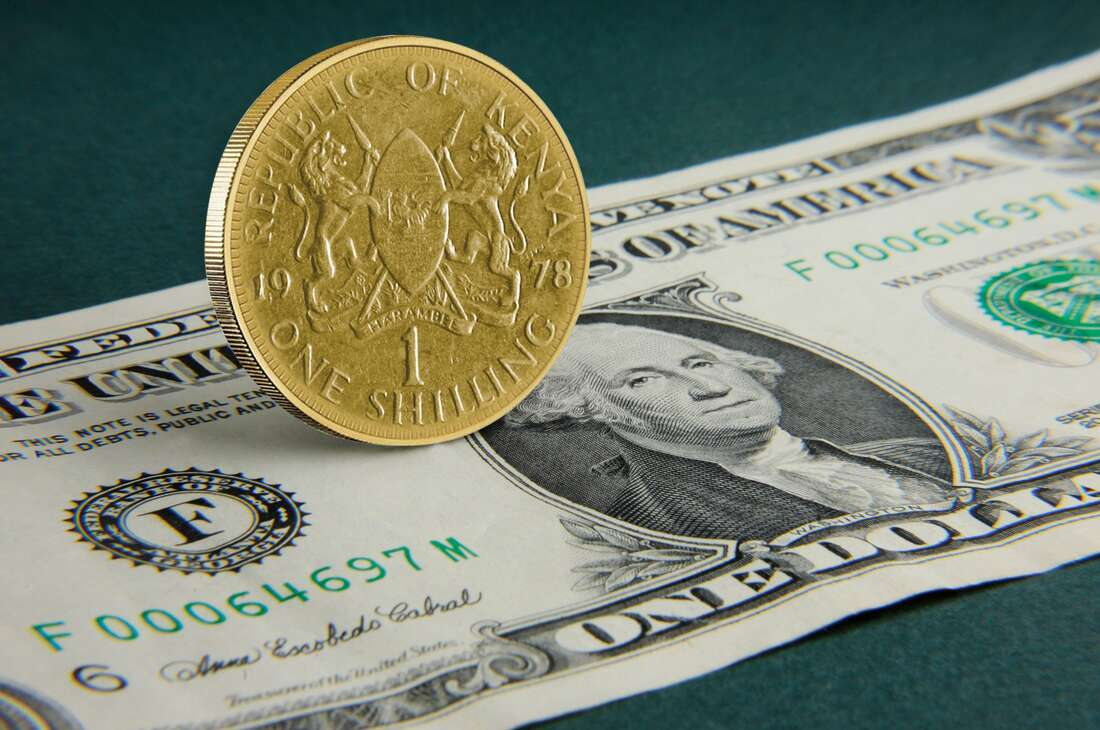
KENYA FOREIGN EXCHANGE CODE: The Central Bank of Kenya (CBK), stirred by dwindling foreign exchange reserves, on Wednesday issued guidelines for foreign exchange trading to commercial banks in the hope to stabilize the forex market that has seen particularly the US dollar make huge gains against the local unit, the Kenya Shilling.
In a press release, the CBK announced it has issued the Kenya Foreign Exchange Code (the FX Code) to commercial banks to guide the market on forex trades. The FX Code sets out standards for commercial banks, and aims to strengthen and promote the integrity and effective functioning of the wholesale foreign exchange (FX) market in Kenya.
“It will facilitate better functioning of the market, reinforcing Kenya’s flexible exchange rate regime for greater resilience of the economy,” CBK said.
According to the CBK, the Kenya FX Code focuses on six leading principles to be adhered to by institutions. Financial institutions are now required to observe ethical and professional behavior when operating in the forex market and implement sound and effective governance framework to oversee FX market activity.
See Also >> Kenya Shilling Seen To Sink Further Against Dollar
The CBK also requires banks to exercise due care when negotiating and executing transactions and have not only clarity but also accuracy in communication.
On risk management and compliance under the Kenya Foreign Exchange Code, commercial banks are now supposed to develop and maintain a robust control and compliance framework and at the same time ensure predictable, smooth, and timely settlement of FX transactions.
Kenya’s foreign exchange market has expanded significantly over the years in line with global developments. It is an important enabler of trade, investments, and remittances into and out of the Kenyan economy. Progressively, the Central Bank of Kenya (CBK) in its oversight role over the FX market has enhanced the regulation and surveillance of the market.
CBK says it continues to closely monitor the market considering its growing complexity and emerging risks to fair and effective trading. The FX Code comes at a time when market sophistication has grown, leading to wild swings and disruptions of local reserves.
Kenya’s forex exchange reserves have declined significantly to stand at just about $6 billion, an equivalent of 3.6 months of import cover, a new low. Some commercial banks in Kenya have been accused of hoarding dollars or selling the US unit at extremely high prices, destabilizing the foreign exchange market.
Read >> President Warns Forex Traders As Dollar Shortage Worsens
The Kenya shilling has declined against the dollar to trade at 130, a historic low, with the fall partly blamed on low foreign exchange reserves. The dollar shortage has hit manufacturers and traders hard in recent months.
“In preparing this FX Code, CBK has also benefitted from related guidance issued by global standard-setting bodies as well as by supervisory authorities in other jurisdictions,” CBK said. “In particular, the FX Code draws from the Global Foreign Exchange Code (Global Code) customized as appropriate to the Kenyan context.”
Global forex code
To help restore trust and promote the effective functioning of the global FX market, the CBK said, the Bank for International Settlements (BIS) spearheaded the development of the Global Code. In developing the Global Code, BIS worked with various market participants from different jurisdictions including Central Banks, banks, asset management firms and corporates.
The Global Code provides a common set of guidance to participants to underpin effective functioning of the FX market. Additionally, it provides a set of principles universally recognized as best practices.
To date, 51 countries have stated their commitment to the Global Code. “CBK will continue to work with all stakeholders to ensure the integrity and effective functioning of the FX market in Kenya,” the statement said.
Next Read >> Fawzia Ali: Meet Safaricom’s New Consumer Business Officer











Leave a comment