

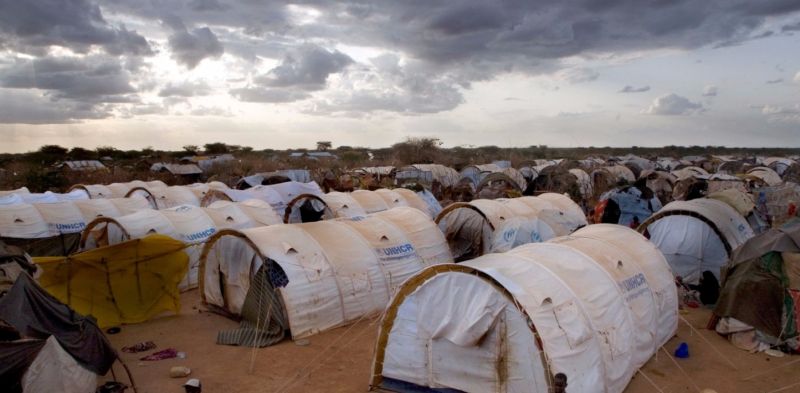
The number of asylum seekers living in Kenya rose fourfold over the last five years, fueled largely by recent arrivals from neighbouring countries like Somalia, Sudan, and Ethiopia, whose political violence and instability, compounded by economic woes and drought, have led to massive loss of life, destruction, and displacement.
An asylum seeker is someone who has fled their home country in search of safety and protection in another country because of war, violence or persecution, often without warning. Kenya has a long tradition of providing refuge and has welcomed thousands of asylum seekers fleeing their countries.
United Nations High Commissioner for Refugees (UNHCR) data shared with the media has revealed that from 2019, the number of asylum seekers in the country increased four times or by 333.62%, from 48,244 to 209,194 in 2024.
Of all the asylum seekers, the majority—over 50%—come from Somalia, followed by South Sudan and the Democratic Republic of Congo (DRC), with a small but significant number from Ethiopia, Burundi, Sudan, Uganda, Eritrea, and Rwanda.
Similarly, UNHCR confirmed that during the period under review, Kenya took in refugees whose numbers, together with asylum seekers, increased by 66.8%, rising from 482,442 to 804,594 today.
“In recent years, Kenya has demonstrated its commitment to the implementation of international soft law instruments on refugee protection and is increasingly adopting a sustainable approach to refugee-related interventions, gradually moving from a humanitarian to a developmental approach,” UNHCR said.
While the terms “asylum seeker” and “refugee” are often used interchangeably, an asylum seeker is defined under Kenya’s Refugee Act of 2021 as a person seeking protection whose case is yet to be determined. Once an asylum seeker’s case is registered by the government, they become recognised as a refugee.
The UNHCR also revealed that the majority of asylum seekers and refugees in Kenya reside in camps, with Dadaab Refugee Camp in Garissa County hosting more than 402,000 individuals (about 50%) and Kakuma Camp in Turkana County housing approximately 295,617 (36.7%).
> How Affordable Housing Board Allocates Units To Kenyans














Leave a comment