

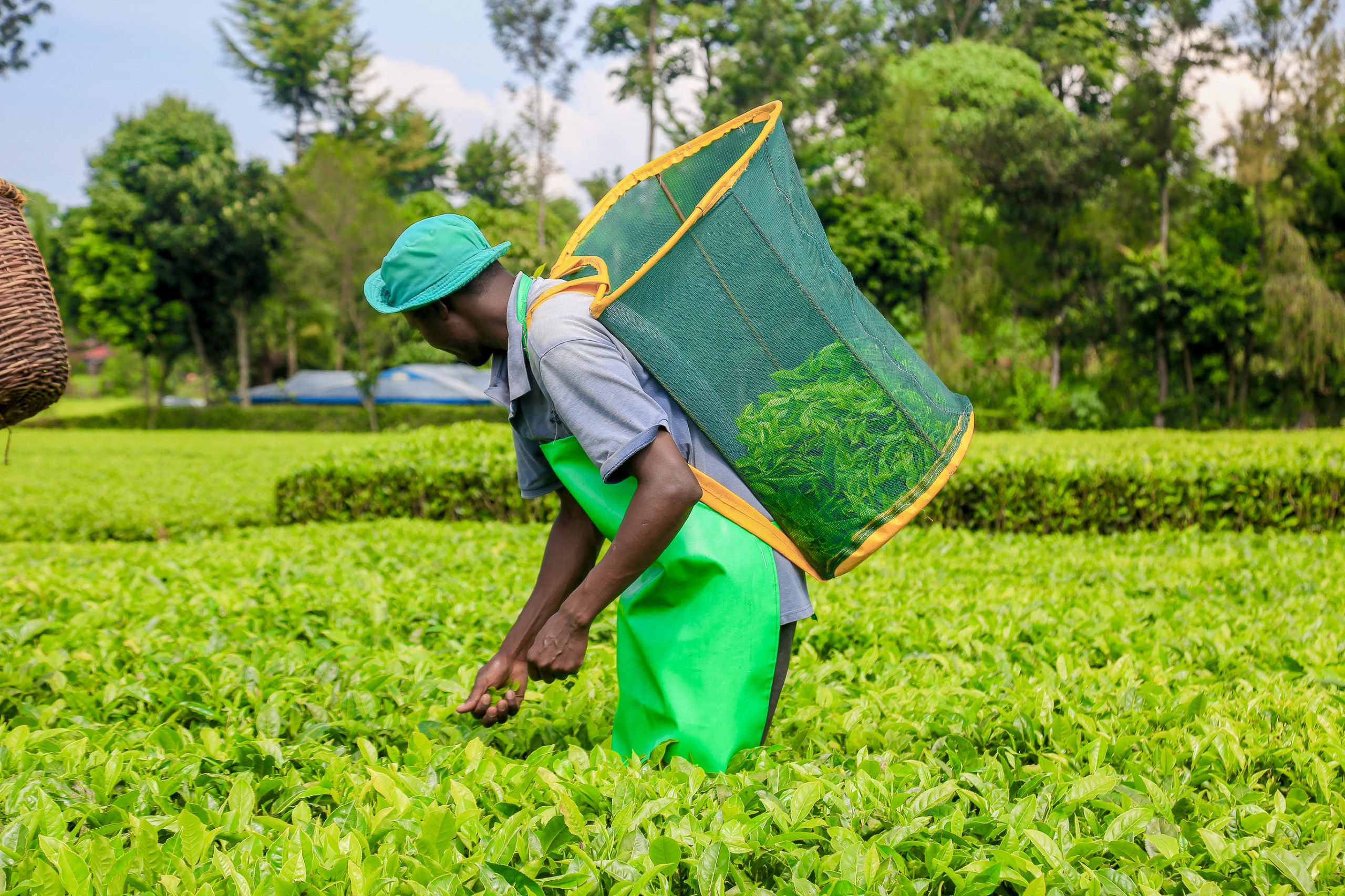
Smallholder tea farmers under KTDA produced a record 373.8 million kilos of green leaf between July and October 2020, the highest production ever recorded within a period of four months in KTDA’s history. The four months production is 3.9% higher than 359.6 million kilos of green leaf recorded in the same period in 2019.
KTDA (Management Services) Managing Director Mr. Alfred Njagi attributed the increase in green leaf production to favourable weather conditions in the tea growing areas and good farming practices by tea farmers as recommended in the Farmers Field Schools (FFS) programme.
On average, all teas at the Mombasa auction sold at USD 1.89 (Ksh206.44) during this period, down from USD 2.01 (Ksh219.55) in the corresponding period in 2019.
This drop is linked to the higher supply of tea in the markets, a factor that is critical in determining farmers’ earnings at the end of the financial year. This is the third year in a row that prices have declined due to global supply surplus above market demand and in line with a 2018 Food and Agriculture Organization (FAO) market forecast.
Despite this, factories managed by KTDA teas fetched better prices at the auction in the period under review (July – October 2020) averaging USD 2.20 per kilo of made tea, down from USD 2.45 recorded during a similar period in 2019.
The 10% drop in tea prices for KTDA-managed factories is attributed to high volumes of tea produced during the period, continued Covid-19 pandemic disruption in key export destinations as well as the global oversupply situation.
Pakistan, Egypt, UK, UAE and Sudan remain Kenya’s key export destinations for the predominant black CTC-type of tea produced in Kenya.
These countries have gone through political and economic challenges over past years affecting their purchasing power.
KTDA-managed factories continue to work on improving operational efficiencies to reduce production costs through a number of initiatives.
These initiatives include investment in small hydro power stations for cheaper power supply, automation of various processes, diversification to orthodox teas to reduce reliance on Black CTC teas and training of farmers on income diversification and management.













Leave a comment